Published: 9 October 2026
Quick Answer
HTHS viscosity and kinematic viscosity answer different questions. HTHS describes an oil’s viscosity under specified hot, high-shear test conditions; kinematic viscosity describes its flow under a different test arrangement. Neither figure replaces the vehicle’s complete oil requirement. For purchasing, compare the SAE grade, performance category, OEM specification and current test information together—not the largest number in a supplier’s table. [1][2][3]
Start with the measurement, not the marketing adjective
An importer comparing two 5W-30 oils often receives a tidy table: viscosity at 40°C, viscosity at 100°C, viscosity index and perhaps HTHS. The figures look comparable, but they are not four versions of the same measurement. A purchasing spreadsheet that labels them simply ‘viscosity’ loses the detail needed to make a sound comparison.
ASTM D445 covers kinematic viscosity measured by gravity flow through a calibrated capillary. TDS entries commonly report it in mm²/s, also written as cSt, with the temperature alongside. ASTM D4683 measures engine-oil viscosity at 150°C and a specified high shear rate using a tapered bearing simulator; its result is reported in mPa·s, equivalent to cP. [2][3]
Keep the unit, temperature and method in separate columns. Converting cSt to cP using density at the same temperature is a conversion between kinematic and dynamic viscosity under the relevant conditions. It is not a shortcut for calculating a product’s HTHS result from its KV100. [2][3]
| Entry | Common reporting format | What to check | What it does not establish |
|---|---|---|---|
| Kinematic viscosity at 40°C | mm²/s or cSt; ASTM D445 | Temperature, method and product identity | HTHS performance or cold-cranking compliance |
| Kinematic viscosity at 100°C | mm²/s or cSt; ASTM D445 | Compare like-for-like temperature and method | A directly calculated HTHS result |
| HTHS viscosity | mPa·s or cP; stated high-temperature/high-shear method | Method, temperature and required specification | Complete category compliance or OEM approval |
| SAE multigrade, e.g. 5W-30 | SAE J300 viscosity classification | Full grade and vehicle requirement | Universal interchangeability or all-round quality ranking |
Why the same SAE grade does not make two oils interchangeable
SAE J300 classifies engine oils by viscosity-related properties, not by every aspect of performance. A 5W-30 designation is therefore a starting filter, not a complete application approval. The oil still needs the performance and manufacturer requirements specified for the engine. [1]
Consider a buyer who wants to consolidate several 5W-30 lines into one carton design. One line may serve an ILSAC-oriented gasoline application; another may be intended for an ACEA C3 application. The front-label grade can match while the required product file does not. Ask which exact engines and specifications the consolidated SKU is supposed to cover before agreeing to the artwork.
For a range decision, group customer demand by verified specification first and pack size second. This usually produces a more useful comparison than a list containing only viscosity grade and unit price. If the fitment information is incomplete, keep the products separate until the technical question is resolved.
Read an HTHS limit within its performance category
The ACEA 2023 light-duty sequences illustrate why context matters. C3 has a minimum HTHS requirement of 3.5 mPa·s. C2 has a minimum of 2.9 mPa·s; that minimum alone does not establish a C2 upper limit. C5 and C6 have a defined HTHS band of at least 2.6 and below 2.9 mPa·s. These are category requirements, not measurements of any KATMOTO product. [4]
Those numbers are not a ranking from poor to premium. They belong to different application and performance frameworks, with requirements beyond HTHS. ACEA also warns that some categories are unsuitable for certain engines. Follow the vehicle manufacturer’s stated oil requirements rather than substituting a category because its HTHS is higher or lower. [4]
An isolated laboratory result cannot establish a complete ACEA claim, an OEM approval or a fuel-economy promise. A report showing one viscosity result may answer one purchasing question while leaving the rest of the specification file open. Record exactly what the evidence supports and what still needs confirmation.
Separate a typical TDS value from a shipment acceptance limit
A TDS is useful for screening products. Its typical values, however, should not silently become your contractual minimums or maximums. A supplier may publish a representative value without promising that exact number on every batch. Ask which figures are typical, which are controlled limits and which can be reported for the supplied lot.
The same discipline applies to test methods. A cell that says ‘ASTM D4683 / D4741’ is not as specific as a report identifying the method actually used. Ask for that identification when comparing close results or agreeing an acceptance rule; do not declare different methods interchangeable without technical support.
Keep the product name, viscosity grade, document revision, test temperature, method and sample identity connected. If independent testing is part of the purchase, agree sampling, laboratory responsibilities and the decision process before shipment. Testing a sample without an agreed interpretation can create a dispute instead of resolving one.
A practical KATMOTO example: K8 EURO 5W-30
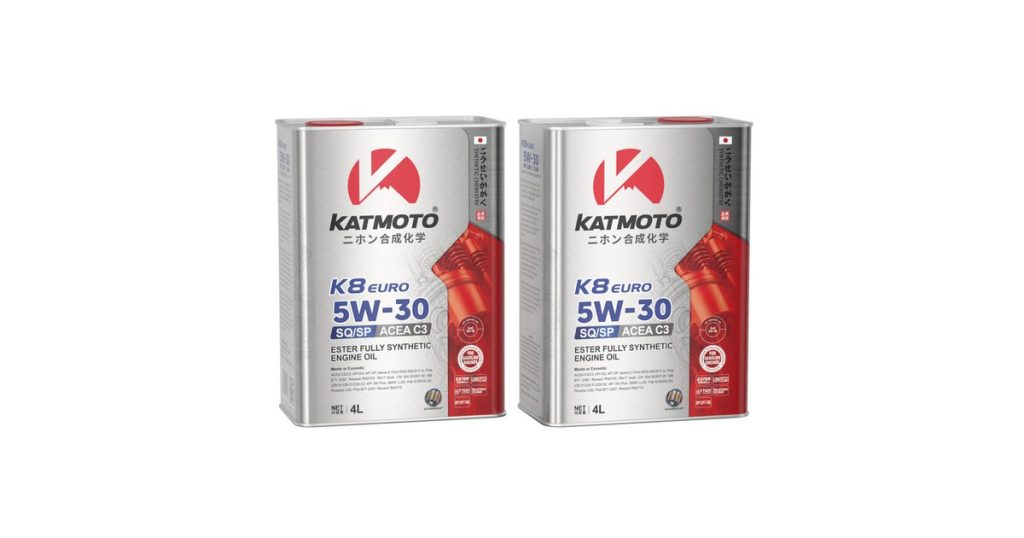
The current KATMOTO K8 EURO 5W-30 product page lists SAE 5W-30 and ACEA C3 performance wording. It also distinguishes ‘suitable for’ wording from official approval. Use that page to identify a candidate product, then request the current technical file for the precise application and destination market. [5]
For this article, we do not turn a published target typical HTHS value into a guaranteed batch result. Nor do we treat a manufacturer specification listed under ‘Suitable For’ as an independently verified approval. If your customer requires official approval, request evidence for the exact product and verify the relevant approval status separately.
The useful inquiry is specific: ‘We need a 5W-30 product for these engines and this OEM specification. Please identify the current TDS, HTHS method and claim status.’ That gives the product team something concrete to check. ‘Send your best 5W-30’ does not.
Keep specification identity visible through packing and dispatch
Technical selection can be undone by an ordinary warehouse mistake. Two products with similar packs should remain distinguishable in the quotation, purchase order, carton label and picking record. The commercial product code and printed specification wording should point back to the same approved product file.
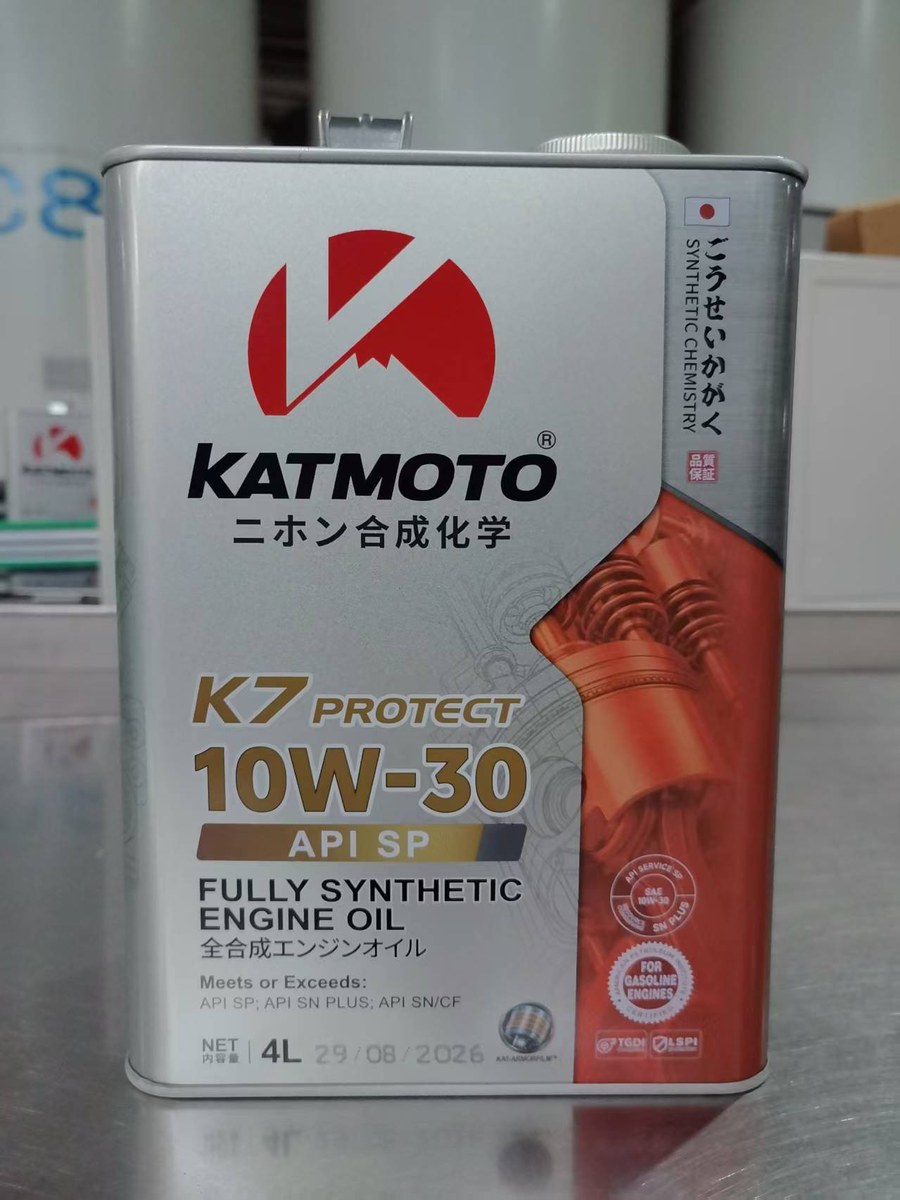
A real packaging photograph can help a buyer check what is visible on a can, but it is not evidence of HTHS performance, batch conformity or official licensing. The K7 PROTECT 10W-30 photograph below illustrates label identification only; it is not the K8 EURO 5W-30 product discussed above.
Before approving a mixed order, ask how pack size, product code and lot identification will be reconciled at receipt. Keep uncertain cartons out of the saleable picking location until their identity is confirmed. This is a receiving control, not a claim about present stock or production capacity.
Four shortcuts that make a technical comparison unreliable
Do not select the highest HTHS as a universal upgrade. Do not assume a low HTHS figure proves a fuel-saving percentage. Do not compare a KV40 figure with another supplier’s KV100 figure. And do not use the word ‘synthetic’ as a substitute for an application specification.
A missing HTHS value also needs a measured response. It does not automatically mean the product is unsuitable, but it leaves a gap if HTHS evidence is required for your evaluation. Ask the supplier whether the result is available, which method supports it and how it relates to the claimed category.
If the answer remains unclear, retain the product as a candidate rather than releasing it for an unverified application. A smaller range with clear fitment boundaries is easier to explain to regional distributors and workshops than a broad compatibility claim the importer cannot document.
What to include in an HTHS-focused engine oil RFQ
Send the intended vehicle or engine applications, destination market and exact OEM requirement, not just the preferred viscosity grade. Include the performance category wording your customer needs and whether formal licensing or approval is a purchase condition.
Ask for the current TDS and the meaning of each reported value, with HTHS test method and temperature where relevant. State your document language, pack formats and estimated order volume. MOQ, availability, price and lead time should be confirmed for the inquiry; this guide makes no commercial commitment.
Finally, agree who can authorize an application substitution or a document revision. A distributor should not have to improvise technical equivalence at the point of sale because the purchasing file never recorded the decision.
| Purchasing question | Request from the supplier | Release condition to agree |
|---|---|---|
| Which application is covered? | Exact engine/OEM requirement and product recommendation | Documented application match |
| What does the HTHS figure mean? | Value, unit, temperature, actual method and document revision | A comparison on an agreed technical basis |
| Is the figure typical or guaranteed? | Written status of values and controlled limits | No unagreed conversion of typical data into batch limits |
| Is approval required? | Product-specific approval or license evidence where applicable | Verification separate from ‘suitable for’ wording |
| How will the shipment be identified? | Product code, pack label, lot records and agreed documents | A traceable match between order, product and supplied lot |
A six-step specification review before ordering
- List the actual engines and the vehicle manufacturer’s oil requirements.
- Shortlist the SAE grade and complete performance specification together.
- Compare the TDS entries with their units, temperatures, methods and revision dates.
- Resolve missing HTHS evidence, claim wording and any approval requirement.
- Agree any sampling, batch limits and exception-handling process in writing.
- Approve the product code, label and purchasing file before placing the order.
Frequently Asked Questions
What is HTHS viscosity in engine oil?
It is viscosity measured under specified high-temperature, high-shear conditions. ASTM D4683 uses 150°C and a defined shear rate; the result is expressed in mPa·s. [3]
Can HTHS be calculated from kinematic viscosity at 100°C?
Not by a simple unit conversion. KV100 and HTHS use different test conditions, so request the relevant measured HTHS information.
Is higher HTHS always better?
No. Select oil against the engine’s complete specified requirements, not a standalone higher-is-better rule.
Do all 5W-30 oils have the same HTHS?
No. A shared SAE grade does not establish identical HTHS values, performance categories or OEM suitability. [1]
Does an HTHS result prove ACEA C3 compliance?
No. C3 includes other requirements; one viscosity result is not a complete performance dossier. [4]
Is a typical TDS value a guaranteed COA limit?
Not unless the supplier explicitly agrees that status. Clarify representative values, controlled limits and the information available for the supplied lot.
What if a supplier does not publish HTHS?
Ask whether relevant test data are available. If the figure is needed for your application review, leave that decision open until sufficient evidence is provided.
Build the specification file before you build the order
Review KATMOTO K8 EURO 5W-30 and send your engine applications, required specification and document checklist to KATMOTO. Distributor inquiries can include the proposed local product range. For the separate roles of technical, safety and batch documents, see our TDS, SDS and COA guide.
Sources & References
- SAE International — J300_202405: Engine Oil Viscosity Classification (2024-05-09), J300_202405: Engine Oil Viscosity Classification
- ASTM International — D445-26: Kinematic Viscosity of Transparent and Opaque Liquids (2026-07-09), D445-26: Kinematic Viscosity of Transparent and Opaque Liquids
- ASTM International — D4683-25: Engine Oil Viscosity at High Shear Rate and 150°C (2025-07-09), D4683-25: Engine Oil Viscosity at High Shear Rate and 150°C
- ACEA — 2023 Oil Sequences for Light-Duty Engines (September 2023), 2023 Oil Sequences for Light-Duty Engines
- KATMOTO — K8 EURO 5W-30 product information (accessed 2026-10-09), K8 EURO 5W-30 product information