Published: 28 October 2026
Quick answer
A mixed-SKU lubricant order needs more than an agreed total volume. Confirm which products and pack sizes the supplier will combine, distinguish a mixed shipment from a mixed pallet, and map each order line to cartons and pallet identifiers. Approve the final quantities and documents together. Neither mixed-order availability nor a particular MOQ should be assumed from a product catalogue.
First clarify what “mixed” means in the quotation
The proposed order contains engine oil in two pack sizes and several cartons of transmission fluid. The total litres look reasonable. Then the warehouse asks a question the quotation never answered: will each product arrive on its own pallet, or will several SKUs share one? That is where the packing conversation needs to begin.
A mixed shipment can contain separate, single-SKU pallets. A mixed pallet contains more than one SKU on the same handling unit. These are different arrangements, with different identification and receiving work. Ask the supplier which arrangement is actually being offered before comparing prices or booking collection.
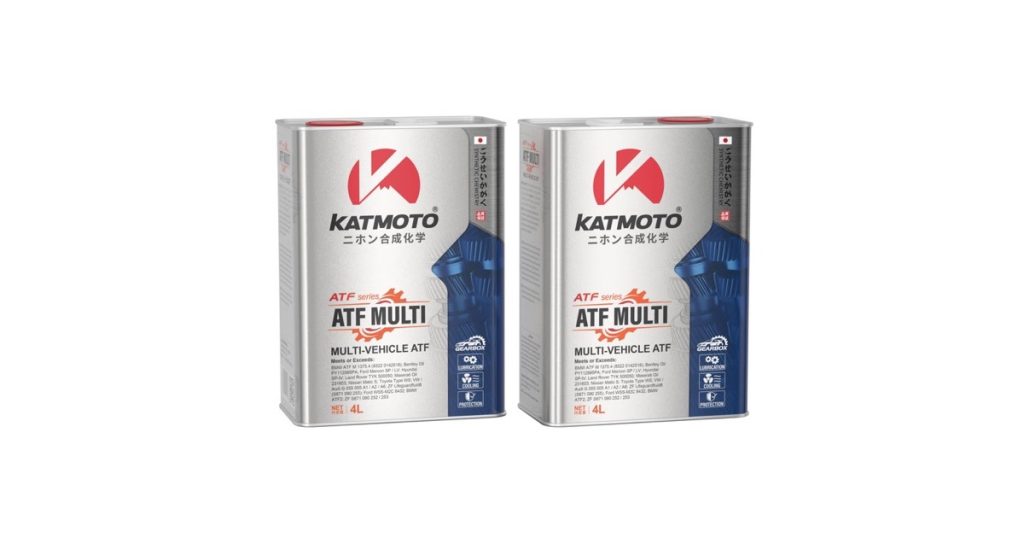
This guide concerns packaged passenger-car lubricants, not blending fluids together. Separate products remain separately identified products. For example, KATMOTO ATF MULTI has an application notice excluding CVT, DCT, e-CVT and DHT uses without explicit vehicle-manufacturer approval. Putting cartons in the same shipment does not change that boundary.[3]
Also ask whether minimum quantities apply per product, viscosity, pack size, artwork version or total order. A supplier may accept one combination but not another. Record the answer for this quotation; do not turn it into a permanent promise for every subsequent order.
Reconcile cartons and units before discussing container space
Give every ordered combination its own line. A 1 L pack and a 4 L pack are separate lines even when they contain the same named oil. Include the exact product code, approved specification wording, unit volume, units per carton and carton count. Avoid a line that merely says ‘assorted engine oil’.
Check the arithmetic in both directions: cartons multiplied by units per carton gives packaged units; units multiplied by pack volume gives nominal liquid volume. State which unit the commercial quantity uses. A carton count cannot be compared with a bottle count until the conversion is clear.
The example below is hypothetical. Its products and case counts are teaching inputs, not KATMOTO packing specifications, MOQ or container capacity. The totals are 22 cartons, 192 packaged units and 408 L. Those three totals describe different things and should not be copied into one another’s fields.
Nominal litres are not shipping kilograms. Obtain the actual declared net and gross masses, carton dimensions and pallet dimensions from the responsible supplier or packer. Do not derive a load plan by treating every litre as one kilogram or by adding only the volumes printed on the cans.
| Example line | Pack / units per carton | Cartons | Packaged units | Nominal liquid volume |
|---|---|---|---|---|
| Engine oil A | 4 L / 6 units | 8 | 48 | 192 L |
| Engine oil B | 1 L / 12 units | 10 | 120 | 120 L |
| Transmission fluid C | 4 L / 6 units | 4 | 24 | 96 L |
| Total | Illustrative combinations only | 22 | 192 | 408 L |
Give every pallet an identity and a contents map
The packing list should let the receiving team answer ‘where is this line?’ without opening every carton. Agree a pallet or handling-unit identifier and connect it to product lines, carton quantities and the actual lots packed. Where one line spans two pallets, show both allocations; where one pallet contains several lines, show each of them.
Within the GS1 Logistic Label system, the SSCC identifies the logistic unit and links it to information about its contents. The guideline distinguishes homogeneous and heterogeneous units; for a heterogeneous unit that is not itself a trade item, it advises against placing one GTIN and related item information on the label as though it described all the contents.[1]
If the parties use GS1, agree the applicable label and data exchange with their GS1 advisers and receiving systems. If they use an internal pallet identifier, name it honestly as an internal code. Do not invent an SSCC or describe an ordinary shipping mark as a verified GS1 implementation.
A pallet number is not a manufacturing lot. Preserve the real lot information for the cartons or units it represents. A mixed pallet can contain multiple products and multiple lots; one convenient heading must not erase those distinctions from the underlying records.
Approve the physical pack as well as the spreadsheet
Request current pack and carton images for the ordered version, with readable product names and codes. Confirm which language or artwork revision is being supplied. Similar-looking tins can make a short description ambiguous, particularly when the same series has several viscosity grades. Appearance should help identification, not replace it.
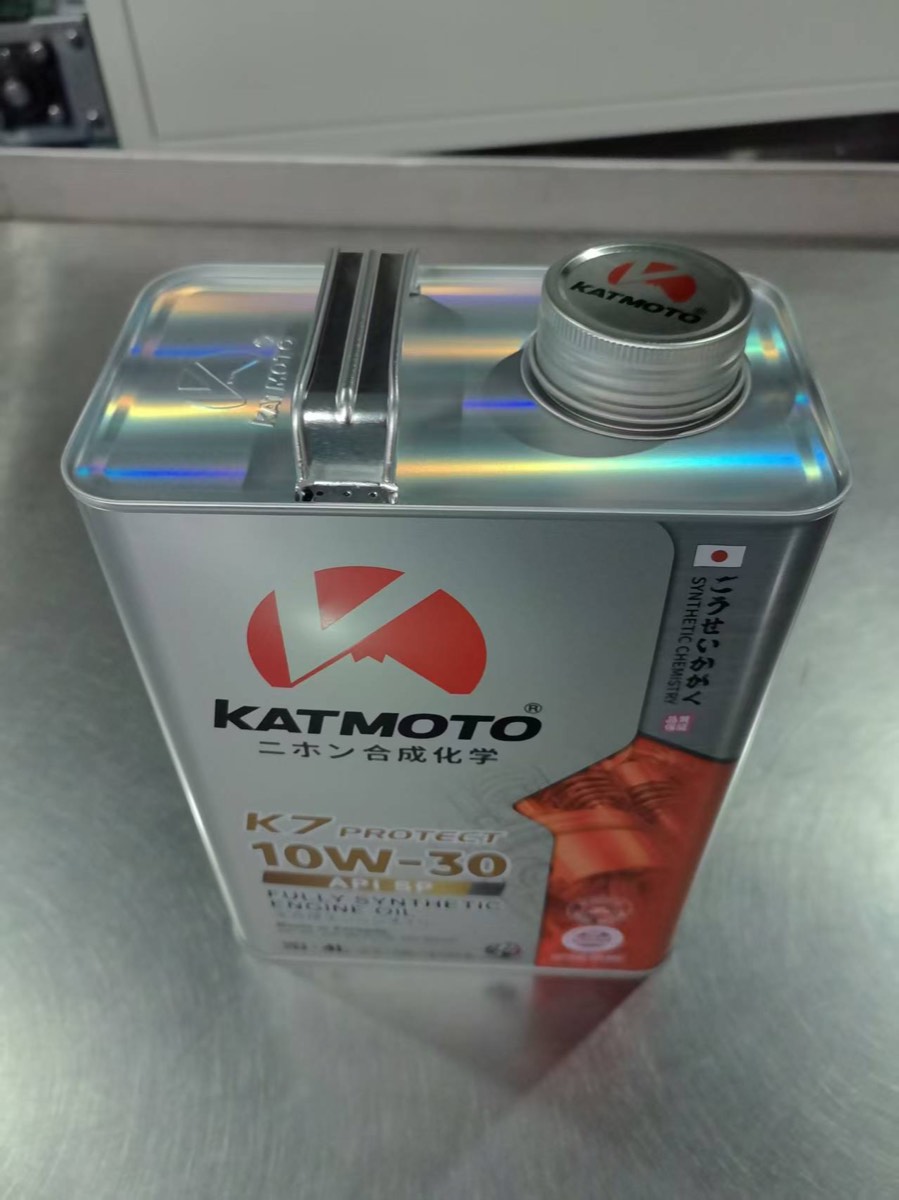
The KATMOTO photograph below shows a K7 PROTECT 10W-30 can, including its cap and handle. It is useful for discussing visible pack features. It does not demonstrate seal performance, a loading test, available stock or the condition of the shipment you will receive.
Decide whether a mixed pallet creates avoidable work at the destination. A distributor who sends sealed pallets directly to regional customers may need a different arrangement from an importer who breaks every pallet in one warehouse. Ask the people receiving and picking the goods before accepting a packing pattern simply because it fits the seller’s spreadsheet.
Hand actual dimensions and weights to the loading specialists
The commercial team should provide the agreed contents, measured or declared package data, destination and handling requirements to the freight forwarder and packer. Let the responsible specialists confirm the actual load arrangement. A photograph of wrapped cartons is not a load calculation, and an unused corner is not permission to add another product at the last moment.
IMO describes the CTU Code as a non-mandatory global code of practice for packing and handling cargo transport units, covering both packing and receiving roles. It is a useful reference for the responsible logistics professionals, not a statement that this article supplies a compliant securing design.[2]
Ask who will resolve transport classification, carrier acceptance and destination requirements using the exact product documents. Do not assume that engine oil, coolant and brake fluid all have the same transport treatment. Record unresolved items before booking; this guide does not assign dangerous-goods classifications or replace professional transport advice.
Freeze one approved version before dispatch
Choose one final order and packing-list revision, identify who approves it, and retire superseded copies from the working conversation. A quantity changed in a chat message should also change the controlled documents and the affected pallet allocations. Otherwise the seller, carrier and receiver can each be working accurately from different versions.
If a requested SKU is unavailable, ask for a revised proposal rather than allowing an unreviewed substitution. A different viscosity, fluid type or label version is not a harmless replacement just because the litres and selling price remain the same. Keep the technical application decision separate from the shipping convenience.
Before dispatch, reconcile the final order lines, invoice quantities, packing list and pallet map. Ask for the agreed photographs and identification records, then record any open exceptions explicitly. At destination, preserve those records so a shortage or mismatch can be discussed against a specific line and handling unit, not an approximate shipment total.
| Decision | What to record | What not to assume |
|---|---|---|
| Commercial mix | Accepted SKUs, pack sizes and MOQ basis | Every catalogue item can share one order. |
| Quantity basis | Cartons, units per carton, units and litres | The quotation uses the same unit as the warehouse. |
| Pallet allocation | Handling-unit ID linked to line, cartons and lots | One pallet equals one SKU or one production lot. |
| Labels and artwork | Approved version and legible pack/carton identity | Similar-looking cans are interchangeable. |
| Load handoff | Actual dimensions, masses and specialist confirmation | Nominal litres determine safe loading or carrier acceptance. |
| Final revision | One approved document set and recorded exceptions | A chat change automatically updates every document. |
A five-step mixed-order release process
- Build the SKU sheet: one line for each product and pack combination, with the vehicle specification already reviewed. Ask which combination the supplier accepts.
- Confirm the quantity units and carton conversions. Obtain actual packaging dimensions and masses instead of estimating them from nominal litres.
- Agree the pallet arrangement and identifier-to-contents map with the receiving team. Confirm the label system and how multiple lots will remain traceable.
- Send the confirmed data to the forwarder and packer for their own loading, carrier and documentation checks. Close technical substitutions separately.
- Freeze the approved order revision, reconcile documents and retain the agreed pre-dispatch evidence. Review any later change before treating the order as released.
Questions importers ask before combining SKUs
Can KATMOTO products be combined in one order?
Ask for confirmation of the exact products, pack sizes, quantities and destination. This guide is a planning framework, not an offer of mixed-SKU availability, a mixed-pallet service or a stated MOQ.
Does mixed shipment mean mixed pallet?
No. A shipment may contain separate single-SKU pallets. If several SKUs share a pallet, the contents and quantities need to be mapped to that handling unit. Confirm the proposed arrangement explicitly.
Should the packing list show cartons or individual packs?
Use clearly labelled fields for both, including units per carton. Also state nominal litres where useful. The invoice and warehouse systems may use different quantity units, so agree the conversion before dispatch.
Can we calculate shipping weight from the litres on the label?
Not reliably by treating litres as kilograms. Request the declared or measured net and gross masses and the packaging dimensions required by the logistics team. Leave actual load planning to the responsible specialists.
Does a pallet barcode prove product approval or origin?
No. A logistic-unit identifier supports identification and data linkage; it is not an API licence, OEM approval or manufacturing-origin certificate. Keep those evidence requests separate.
What happens if a SKU changes after the pallet plan is approved?
Pause release of the affected plan, confirm the replacement’s technical and commercial acceptance, and update quantities, carton data, pallet allocation and document revisions. Do not accept a silent substitution to fill space.
Send a mix that can be quoted and checked
Share your intended product list, pack sizes, quantities, destination and preferred receiving arrangement with KATMOTO. Ask for confirmation of the accepted mix, current product documents and a specific quotation. Use the existing receiving guide to plan the handover, while keeping MOQ, packing and lead-time commitments tied to the actual offer.
Sources & references
- GS1 — GS1 Logistic Label Guideline, sections 1.2.1 and 4.1–4.2 (Release 1.3, July 2019; accessed 28 October 2026), GS1 — GS1 Logistic Label Guideline, sections 1.2.1 and 4.1–4.2
- International Maritime Organization — IMO/ILO/UNECE CTU Code overview (2014 Code overview; accessed 28 October 2026), International Maritime Organization — IMO/ILO/UNECE CTU Code overview
- KATMOTO — ATF MULTI product information and application notice (Accessed 28 October 2026), KATMOTO — ATF MULTI product information and application notice