Quick Answer
Do not buy ATF from colour, viscosity language or a broad “multi-vehicle” claim alone. Identify the exact transmission and the OEM fluid requirement first. Then compare the supplier’s current application list, TDS and label wording with that requirement. A DEXRON-VI-type product, a MERCON LV application, Toyota WS and MB 236.17 are separate purchasing checkpoints. Multi-vehicle ATF can reduce SKU count only where every target application is explicitly supported; it is not a universal replacement for CVT, DCT, e-CVT, DHT or dedicated OEM fluids.
Table of Contents
- Why ATF specification matching comes before brand selection
- DEXRON-VI, MERCON LV, Toyota WS and dedicated ATF compared
- Dedicated-spec ATF versus multi-vehicle ATF
- Why “low viscosity” does not prove compatibility
- Application boundaries: AT, CVT, DCT, e-CVT and DHT
- Seven-step importer selection workflow
- Documents, label and shipment checks
- Common purchasing and sales mistakes
- B2B RFQ checklist
- Frequently Asked Questions
- Sources & References
Why ATF specification matching comes before brand selection
An automatic transmission fluid is part of a calibrated hydraulic and friction system. Its job includes transmitting pressure, controlling clutch engagement, cooling components, protecting gears and bearings, and maintaining seal and oxidation performance. Two fluids can both be described as low-viscosity ATF and still use different friction characteristics or application rules. For an importer, the commercial risk is not merely a dissatisfied driver; it is an incorrect fitment chart repeated across cartons, catalogues, marketplaces and workshop recommendations.
Start with the vehicle manufacturer’s manual or a controlled transmission database. Ford’s 2025 E-Series manual identifies MERCON LV and warns that another fluid can cause transmission damage. Toyota documentation specifies Toyota Genuine ATF Type WS for the cited application, while a GM owner manual specifies DEXRON-VI.[1] [2] [3] These examples show why one regional habit or one viscosity description cannot replace vehicle-level verification.
DEXRON-VI, MERCON LV, Toyota WS and dedicated ATF compared
| Purchase route | Typical application signal | Evidence to request | Do not assume |
|---|---|---|---|
| Purchase route | Typical application signal | Evidence to request | Do not assume |
| DEXRON-VI type | Transmission documentation specifies DEXRON-VI | Current TDS, exact label, application statement and supplier support | That every GM, Ford or Asian AT uses it |
| MERCON LV | Ford application specifies MERCON LV / WSS-M2C938-A | Vehicle manual plus supplier’s explicit coverage | That MERCON ULV, MERCON V or any low-viscosity ATF is interchangeable |
| Toyota WS | Toyota/Lexus application specifies ATF WS | Manual and exact supplier application entry | That colour or “Asian vehicle” wording proves fit |
| MB 236.17 type | Named 9G-Tronic/NAG3 application specifies MB 236.17 | Transmission identification and product-specific evidence | That older MB 236.10/12/14/15 applications are the same |
| Multi-vehicle ATF | Supplier explicitly lists the exact OEM requirement and transmission | Controlled application list with revision date | That “multi” means all AT, CVT, DCT, e-CVT or DHT |
Dedicated-spec ATF versus multi-vehicle ATF
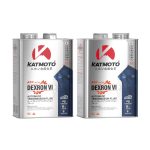
Dedicated-spec products make the stocking logic easy to explain: one SKU is positioned around one named performance route. KATMOTO ATF DEXRON VI is presented for applications requiring DEXRON-VI-type low-viscosity ATF. KATMOTO ATF M9G is positioned for MB 236.17-type 9G-Tronic/NAG3 applications and specifically excludes older Mercedes-Benz ATF routes and general DEXRON/MERCON applications unless the vehicle requirement supports use.[4] [6]
A multi-vehicle product can consolidate slow-moving SKUs for workshops and distributors, but only after the application matrix is controlled. KATMOTO ATF MULTI lists several low-viscosity routes, including Toyota WS, Honda DW-1, Nissan Matic S, Hyundai/Kia SP-IV, Mazda FZ, Ford MERCON LV/SP and DEXRON-VI-type applications where compatibility is confirmed. Its product notice excludes CVT, DCT, e-CVT, DHT and proprietary fluids unless the vehicle maker explicitly permits use.[5] That conditional wording must survive every translation and catalogue edit.

Why “low viscosity” does not prove compatibility
“Low viscosity” describes only part of the fluid. It does not identify the required friction curve, clutch material response, seal compatibility, aeration control or approved application. Even within one manufacturer, MERCON LV and MERCON ULV are different requirements. A buyer should therefore treat viscosity data as a screening field, not a cross-reference authority.
Colour is even less useful. Red, amber or another dye may help service identification, but colour is not an OEM performance specification. A dark used-fluid sample can indicate ageing or contamination, yet a new fluid’s colour cannot prove that it matches a transmission. Procurement and workshop charts should display the named requirement, not a colour shortcut.
Application boundaries: AT, CVT, DCT, e-CVT and DHT
Conventional step automatic transmissions use ATF, but the label “automatic transmission” does not make every fluid suitable. Belt or chain CVTs use CVT fluid with dedicated friction behaviour. Wet-clutch DCTs use DCT fluid. Hybrid e-CVT and DHT units can integrate motors and electrical components and may require specific cooling, electrical and material-compatibility properties. Never place those systems inside a general ATF cross-reference unless the vehicle maker and product documentation explicitly support the exact application.
The same discipline applies to servicing. Drain-and-fill volume is not dry capacity, and many modern units require temperature-controlled level setting or special procedures. An importer should avoid publishing a universal fill quantity or service interval. Supply the correct fluid identity; direct workshops to the current service information for quantity, temperature, tools and procedure.
Seven-step importer selection workflow
- Identify country, vehicle, model year, engine and transmission code—not only the vehicle name.
- Record the exact OEM fluid specification and any service bulletin supersession.
- Separate conventional AT, CVT, DCT, e-CVT, DHT, transfer-case and power-steering applications.
- Match each requirement against the supplier’s current product-specific application list.
- Review the TDS, label and technical wording; distinguish “recommended for”, “meets requirements” and any official approval or licence.
- Approve SKU, pack size, GTIN, carton, language and batch-code area before printing.
- Freeze the fitment version used by sales teams and require change notification before substitution.
Documents, label and shipment checks
| Checkpoint | Acceptable evidence | Red flag | Importer action |
|---|---|---|---|
| Checkpoint | Acceptable evidence | Red flag | Importer action |
| Transmission fitment | VIN/transmission code or controlled model-year record | Only vehicle make or regional habit | Confirm the exact unit |
| Performance route | Manual/specification plus product application entry | “Universal” or colour-only advice | Hold the application claim |
| TDS and label | Same product name, code, spec wording and revision | Different claims between documents | Reconcile before artwork |
| Pack data | Net content, SKU, GTIN, carton and batch area agree | One barcode reused across grades or packs | Correct master data |
| Shipment | PO, label, batch identity and agreed records match | Different product code or unapproved revision | Hold and investigate |
| Sales chart | Version-controlled applications and exclusions | Spreadsheet with no source or date | Publish only reviewed rows |

Common purchasing and sales mistakes
- Cross-referencing ATF from vehicle brand alone without the transmission code.
- Treating DEXRON-VI, MERCON LV and Toyota WS as names for one generic low-viscosity fluid.
- Using “multi-vehicle” as “universal” in translation or marketplace copy.
- Including CVT, DCT, e-CVT or DHT applications in a conventional ATF chart.
- Copying a dedicated-fluid claim to another viscosity or formulation.
- Approving label artwork before the application list and TDS agree.
- Quoting a dry-fill capacity as the service refill volume.
- Letting a temporary stock shortage drive an unsupported substitution.
B2B RFQ checklist
- Target markets and sales channels
- Vehicle and transmission-code sample for each target application
- Required OEM fluid specification and source date
- Dedicated-spec or multi-vehicle stocking strategy
- Current TDS, SDS and controlled application list
- Exact claim wording and evidence level
- 1 L, 4 L or other pack configuration
- GTIN, carton, label language and batch coding
- Sample and pre-shipment approval rules
- Fitment revision and supplier change-notification process
Frequently Asked Questions
Can DEXRON-VI replace MERCON LV?
Do not assume so. Use a product only when its current application documentation explicitly supports the exact MERCON LV transmission and the vehicle requirement allows it.
Is Toyota WS the same as DEXRON-VI?
They are separate OEM application routes. A multi-vehicle fluid may support both, but compatibility must be documented product by product.
Does multi-vehicle ATF work in every automatic transmission?
No. It covers only listed and supported applications, and normally does not automatically include CVT, DCT, e-CVT, DHT or proprietary fluids.
Can ATF colour identify the specification?
No. Colour is not an OEM performance specification and cannot replace the manual or application list.
What is the safest information to send with an RFQ?
Send market, vehicle/model year, transmission code, required specification, pack size, label language and evidence expectations.
Should the supplier provide an application list?
Yes. Request a dated, product-specific list with exclusions and a change-notification process.
Can one ATF SKU reduce inventory?
Yes, when the verified application matrix covers your real demand. Keep dedicated fluids for unsupported or high-risk applications.
Sources & References
- Ford Motor Company — 2025 E-Series Owner’s Manual: MERCON LV requirement.
- Toyota Motor Sales — Owner’s Manual: Toyota Genuine ATF Type WS.
- General Motors — Cadillac CTS Owner Manual: DEXRON-VI ATF.
- KATMOTO — ATF DEXRON VI product information.
- KATMOTO — ATF MULTI product information.
- KATMOTO — ATF M9G product information.
Build an ATF range around verified transmission demand
Compare KATMOTO ATF DEXRON VI, ATF MULTI and ATF M9G, then send the target market, transmission codes, required specifications and pack plan for a controlled quotation.