Published: 2 November 2026 | Technical sources checked: 2 November 2026
Quick answer
Viscosity index (VI) describes how an oil’s kinematic viscosity changes with temperature; it is not its SAE grade or a score for overall engine protection. Compare VI only after matching the vehicle requirement and product identity. Request the 40°C and 100°C viscosity results, calculation basis and document revision before using a higher VI to justify a purchasing decision. [1][2]
Two quotations, one grade, different viscosity indices
Two suppliers offer 5W-30 passenger-car engine oil. One puts a larger VI number in bold. Is that enough to justify a higher price, replace an established SKU or write ‘better protection’ in a distributor catalogue? Not on its own. The comparison has started with a supporting property rather than the application the oil must satisfy.
First establish whether both offers address the same vehicle requirement, performance category and approval conditions. A 5W-30 label does not make every 5W-30 interchangeable. SAE J300 classifies engine oils in rheological terms; its scope explicitly excludes other oil characteristics. A viscosity classification is therefore not a complete performance specification. [2]
Then put VI back into the comparison. It can help explain a TDS, flag a questionable transcription or prompt a useful technical question. It should not turn a shortlist into a highest-number-wins contest. This guide concerns new finished engine oil documents, not diagnosis of used oil or a formula for extending drain intervals.
What VI measures—and what its number does not say
ASTM D2270 calculates VI from kinematic viscosities at 40°C and 100°C. A higher VI describes a smaller decrease in kinematic viscosity as temperature rises. The index is dimensionless: do not print cSt or mm²/s after it. Those units belong to the viscosity measurements used in the calculation. [1]
Read the two input values alongside the index. A standalone VI hides the actual viscosity levels being compared. It is not a percentage, and a numerical difference between two indices is not the same percentage improvement in protection, fuel economy or service life. None of those outcomes is calculated by the VI procedure.
There is also a boundary at the thin end. The published D2270 scope excludes products below 2.0 mm²/s at 100°C. If a supplier presents an unusual ultra-low-viscosity result, ask whether the calculation is within the method’s scope. Do not improvise an extrapolation and put it into a specification. [1]
Keep VI, SAE grade and performance evidence in separate columns
A cold-start question needs the relevant low-temperature evidence, not a VI ranking. A high-shear question needs the applicable high-temperature, high-shear evidence. VI alone answers neither. Treat this as a document boundary: when a seller uses one result to answer another test’s question, request the missing result rather than accepting the explanation as a substitute.
Likewise, do not reverse-engineer a finished oil’s base-oil recipe from VI. The calculation uses viscosity data, not a chemical identification of PAO, ester or additive content. If a composition claim matters to your programme, ask for a specific written declaration with an appropriate basis. Do not infer a percentage from a high-looking index.
A useful comparison sheet leaves room for several answers. Grade, claimed performance, approval status and the viscosity data each get their own field. A blank approval field stays blank until evidence closes it; a large VI cannot fill it. That makes the sheet more useful to sales staff who must explain why two similarly labelled oils remain different purchasing lines.
| Item | What it tells you | What it cannot replace |
|---|---|---|
| Viscosity index (VI) | Temperature dependence derived from 40°C and 100°C kinematic viscosity | SAE classification, engine performance or approval evidence |
| Kinematic viscosity | A measured viscosity at a stated temperature, in mm²/s or cSt | The complete temperature and shear behaviour of the oil |
| SAE grade | A rheological classification under SAE J300 | A full API, ACEA or OEM performance claim |
| Performance / approval wording | The specific declaration or authorization being asserted | Product-specific supporting documents and scope checks |
Check the input data before arguing about the index
Ask for a current TDS naming the exact product and grade, with both viscosity temperatures and the calculation method. ASTM D445 determines kinematic viscosity; ASTM D2270 uses the specified temperature results to calculate VI. The measurement and the calculation are related but are not the same laboratory operation. Keep their method names in the right rows. [1][3]
Next ask whether the entries are typical product data, contractual limits or results for the offered batch. A brochure’s typical VI is not automatically a guaranteed minimum. A batch certificate may report different fields from a TDS. If the purchasing contract needs a VI limit, agree the limit, method, reporting basis and treatment of disputes explicitly rather than lifting a typical number into the purchase order.
Do not make the supplier defend every last digit before checking the paperwork. The wrong grade, an older TDS revision or a copied temperature heading can explain an apparent mismatch. Request clarification tied to the same product revision and sample. Where the figures still do not reconcile, ask the supplier or laboratory for a documented calculation; avoid replacing their result with an unverified online calculator.
| Confirm | Ask the supplier for | Hold or clarify when |
|---|---|---|
| Product identity | Exact name, SAE grade and TDS revision | The quotation and data sheet name different grades |
| VI basis | 40°C and 100°C inputs plus calculation method | Only a promotional index is available |
| Units and temperature | mm²/s or cSt for viscosity; no unit for VI | Units or headings are missing or inconsistent |
| Meaning of the value | Typical data, agreed limit or batch result | A typical value is presented as a guarantee |
| Application evidence | Required performance and any claimed approval | VI is offered instead of the necessary evidence |
| Change control | Affected document, product and delivery revision | Old artwork or unannounced data are reused |
Connect the technical sheet to the actual product and pack
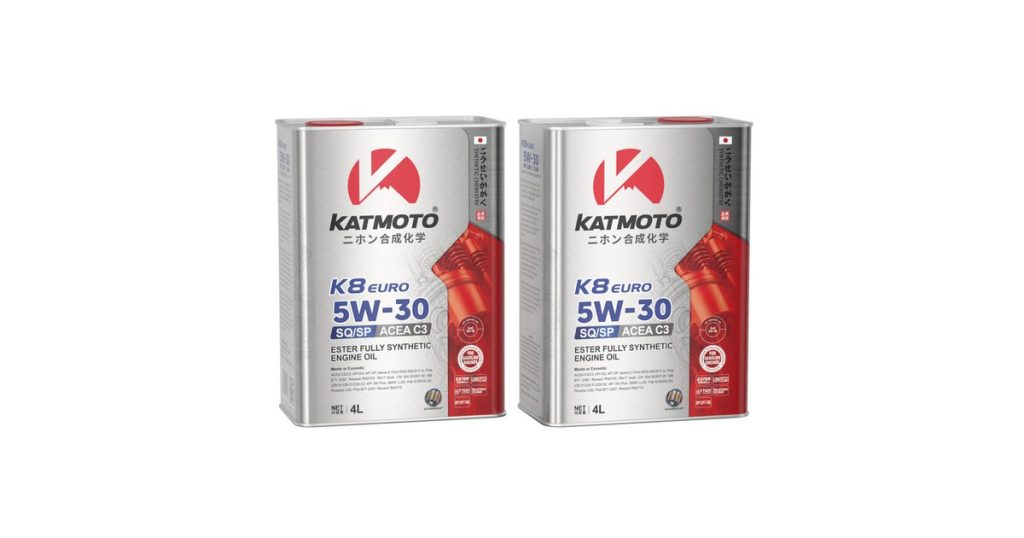
KATMOTO’s K8 EURO 5W-30 page identifies the SAE grade and published API SQ/SP and ACEA C3 performance wording. Its notice limits use to the vehicle’s matching viscosity and performance requirement and distinguishes ‘suitable for’ from official approval. Use that identity and boundary when requesting the current product documents; this article does not assign a verified VI value or confirm licensing or OEM approval for the product. [4]
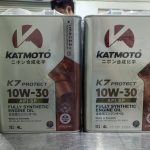
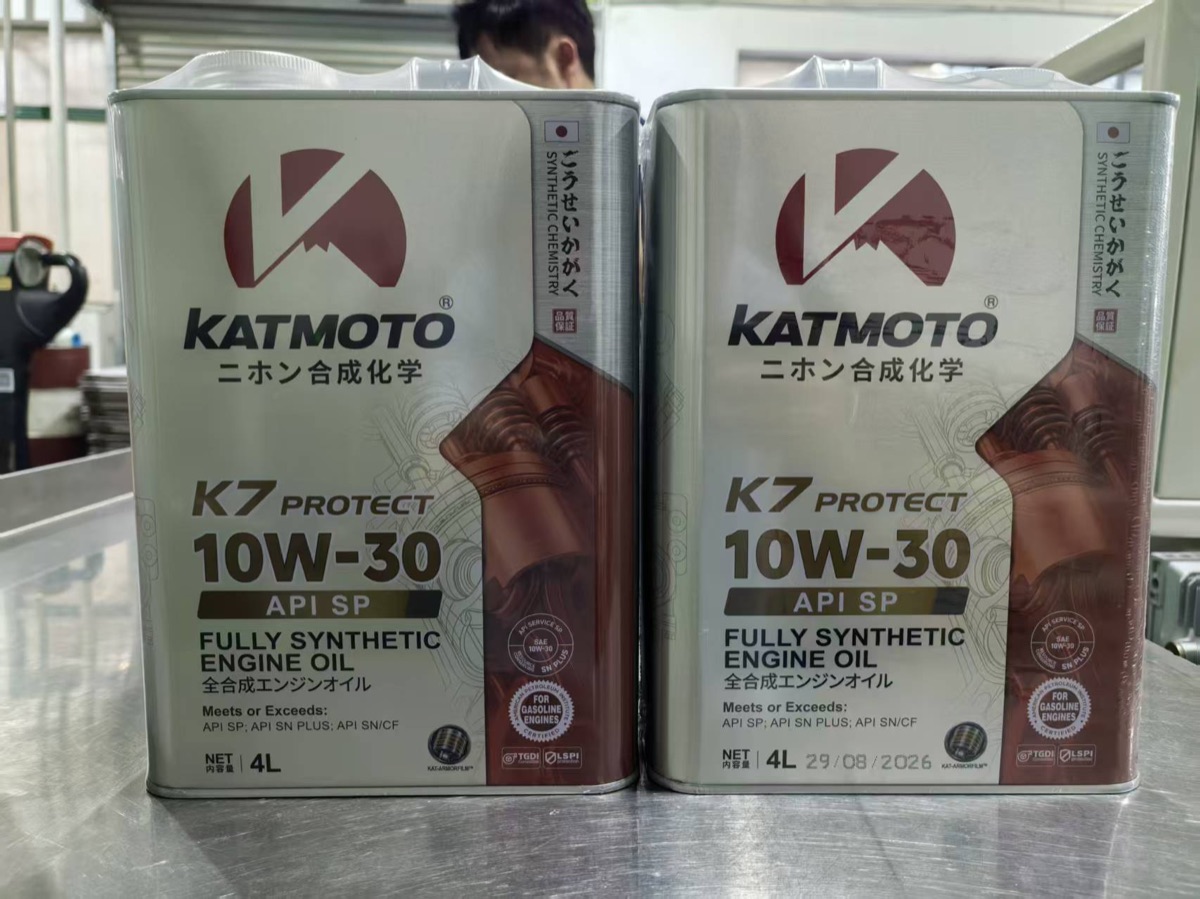
The photograph below shows a different product, K7 PROTECT 10W-30, in two 4 L cans. That distinction is deliberate. A neat brand photograph cannot support the viscosity figures of another grade. Match the product name, grade and document revision before placing a technical table next to packaging artwork.
At artwork approval, keep three things separate: the visible label, the supplier’s current product declaration and any independently verifiable authorization. The photograph establishes visible packaging only. It is not a VI test, batch release, confirmation of current stock or evidence of factory ownership. Avoid adding those meanings in a translated caption.
When should a VI difference change an import order?
A VI difference deserves attention when it changes an agreed specification or exposes a document inconsistency. It does not automatically justify switching a correctly matched oil. Ask what practical requirement the alternative solves, which evidence supports it and whether the application and claim boundaries remain unchanged. Sometimes the right next step is a revised technical sheet, not a new SKU.
For a tender, specify the vehicle application and required performance first. Add only the physical-property limits that your programme genuinely needs and can verify. An arbitrary high-VI threshold can exclude an otherwise appropriate offer without establishing a useful benefit. Conversely, do not waive an agreed requirement merely because the packaging and price look attractive.
Keep the final decision with the quotation revision. Record what was accepted, what remains unverified and what would trigger another review. Commercial terms—MOQ, packaging quantities, price and delivery—still require a specific quotation. Neither a technical index nor a photograph establishes them.
A five-step comparison before the purchase order
- Fix the target vehicle requirement and shortlist only products with the appropriate grade, performance scope and approval evidence where required.
- Collect current, product-specific documents. Put the two kinematic viscosities beside VI and retain units, methods and revisions.
- Clarify whether each value is typical, contractual or batch-specific. Investigate mismatches before setting a new limit.
- Review packaging and translated sales copy against that same product identity. Remove protection, composition or approval conclusions based only on VI.
- Record the purchasing decision and unresolved questions. Agree how future data or formulation changes will be notified rather than assuming the next delivery is identical.
Viscosity-index questions from lubricant buyers
Is a higher viscosity index always better engine oil?
No. It describes temperature dependence of kinematic viscosity, not overall quality. Establish application fit and the required performance evidence before comparing VI. [1][2]
Does VI have a unit?
No. VI is an index. Kinematic viscosity is reported in mm²/s or cSt, with a stated measurement temperature; do not transfer those units to the index. [1][3]
Can two 5W-30 oils have different viscosity indices?
Yes. Do not assume a grade label supplies one unique VI. Compare their actual data and full performance requirements; sharing a grade does not establish interchangeability.
Does high VI prove PAO or ester content?
No. A calculation from viscosity measurements does not identify a finished oil’s composition. Request separate support for any composition claim rather than inferring it from VI. [1]
Can VI replace cold-cranking or HTHS results?
No. Request the appropriate evidence for the cold-temperature or high-shear requirement. VI is not a substitute for either result.
Should a TDS typical VI become the order’s minimum?
Only if that limit and its verification basis are expressly agreed. Clarify typical data versus specification limits and batch reporting before turning a published property into a contractual requirement.
Does this guide certify a KATMOTO VI or approval?
No. The product and photographs illustrate identity checks. Request the current TDS and applicable evidence for the actual offered grade; this article does not certify a numerical property or approval. [4]
Send the two data sheets—not just the larger number
For a KATMOTO enquiry, include your target market, vehicle requirements, proposed grades and current comparison sheets. Identify whether the disputed figure is typical data or a required limit. Request current product documents and a separate commercial quotation before confirming the order.
Sources & references
- ASTM International — D2270-24: Calculating Viscosity Index from Kinematic Viscosity at 40°C and 100°C (Updated 13 May 2024; public scope and significance checked 2 November 2026), ASTM International — D2270-24: Calculating Viscosity Index from Kinematic Viscosity at 40°C and 100°C
- SAE International — J300_202405: Engine Oil Viscosity Classification (Revised 9 May 2024; scope checked 2 November 2026), SAE International — J300_202405: Engine Oil Viscosity Classification
- ASTM International — D445-26: Kinematic Viscosity of Transparent and Opaque Liquids (Updated 9 July 2026; public scope checked 2 November 2026), ASTM International — D445-26: Kinematic Viscosity of Transparent and Opaque Liquids
- KATMOTO — K8 EURO 5W-30 product information and application notice (Checked 2 November 2026), KATMOTO — K8 EURO 5W-30 product information and application notice