Published 2026-11-23
Quick answer
By way of example, a carton says −35°C. The warehouse refractometer reads −31°C. Should the importer reject the lot? Hold it while you check what the two figures describe. ASTM D3321 covers an approximate handheld reading for aqueous ethylene glycol or propylene glycol coolant. ASTM D1177 measures freezing point in the laboratory. Match the sample to the purchase specification, confirm whether the fluid is premixed or concentrated, verify the instrument calibration and glycol scale, and use the agreed laboratory method if the discrepancy could change the release decision. [1][2]
Define the purchase requirement
Before ordering, ask the supplier to identify which form the freeze claim covers: the contents as shipped, or a mixture prepared at a stated dilution. A premix and a concentrate can both carry winter protection information, but their numbers may refer to different liquids. If the order calls for a concentrate, agree on the mixing basis, water quality, and preparation instructions for the comparison. State whether a ratio is by volume or mass. The receiving team should be able to prepare the same test mixture the specification describes without relying on a verbal instruction.
The order file should distinguish a published typical value from a contractual acceptance limit. A technical data sheet may describe an expected property for the product family. A certificate of analysis, where supplied, should identify the specific lot, method and reported result. Check the edition of the method as well. Two documents that say “freezing point” in the same column are still hard to compare if one describes a handheld estimate and the other reports a laboratory determination.
For example, KATMOTO describes Long Life Coolant −35°C as a ready-to-use ethylene glycol product. Its product page states that freeze protection applies as supplied and lists a typical freezing-point target of ≤ −35°C under ASTM D1177. This is a product-page statement. For a specific shipment, confirm the current documentation, pack identification and the lot-level evidence agreed in the purchase order. A freeze point result does not establish an OEM approval or suitability for an unrelated cooling circuit. [2][4]
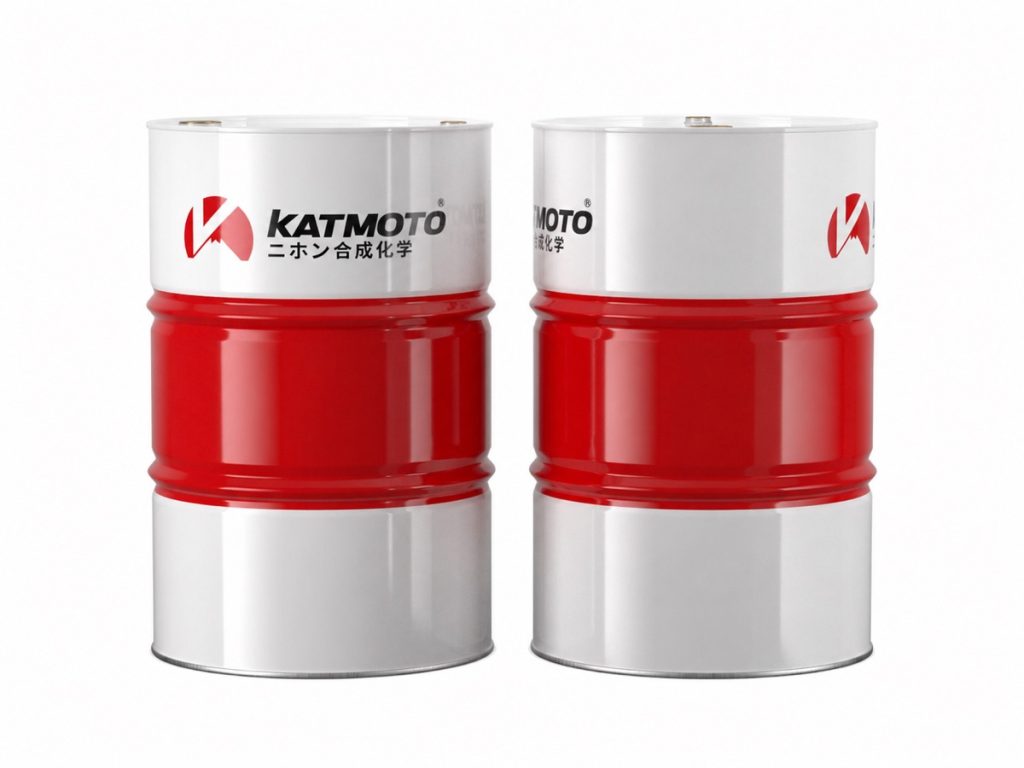
The cover shows two KATMOTO branded drums as a packaging illustration. It does not identify the −35°C product packaging, a coolant batch or a testing setup.
Use the refractometer as a screening tool
A handheld check can help the warehouse flag a lot for review before it enters distribution. When the product is within the scope of D3321, use a calibrated instrument and pick the scale for the documented glycol type. Ethylene glycol and propylene glycol have different scale relationships. If the formulation is unknown, ask for the supplier’s identification and notify the technical reviewer before interpreting the pointer or display. The number a scale displays can look plausible even when the scale is inappropriate. [1]
Create a receiving record that makes the reading reproducible. Include the marked package and lot, sample identification, instrument, calibration status, glycol scale, measurement condition and result. Record whether the sample came straight from the shipped pack or from a test dilution. Use the instrument instructions and site handling procedure. If a result surprises you, check the setup and the identity of the sample before drawing another from a traceable package. A second reading is valuable only when both samples and conditions are understood.
Ford uses a refractometer in some vehicle-specific coolant guidance and gives a narrow concentration range for those applications. That example shows why a reading has to be interpreted against the instruction for the actual application. It supplies no general acceptance range for an importer’s other products. For vehicle work, consult the correct manual and leave hot or pressurised systems to trained personnel following applicable instructions. [3]
| Question at receiving | What to verify | Practical response |
|---|---|---|
| The premix screen is inside the agreed screening range | Correct lot, expected glycol, scale and calibration | Record the result and continue the other release checks |
| A concentrate is compared directly to the end-use label figure | Whether the figure applies to a specified diluted mixture | Obtain the preparation instructions before comparing data |
| The handheld result crosses the review threshold | Instrument setup, sample traceability and supplier lot result | Hold affected stock for the agreed technical review |
| The supplier result and warehouse result use different methods | Test method, sample preparation and units | Compare under the contract method before disposition |
| The glycol base is uncertain or the product falls outside the method scope | Documented base and suitable method | Refer to the laboratory or supplier before interpreting an estimate |
Decide when to send a sample to a lab
Agree on an escalation rule before delivery. A useful plan says which readings trigger repeat screening, when to request a laboratory test, and who can clear held stock. Base the rules on the product requirement, the instrument, and how close a result can be to the release limit before uncertainty affects the decision. A universal rule to accept “within a few degrees” leaves too much to individual judgement when a shipment is under time pressure.
In the hypothetical −31°C example, check that the sample is from the correct premix lot, the instrument is calibrated, and the appropriate scale was used. Review the supplier’s lot document. If that document gives a D1177 result and the purchase agreement calls for D1177, ask the designated laboratory to test a traceable sample under that method. Keep reserve documentation and define which lot or lots are on hold. Avoid blending, relabelling or releasing the lot while the discrepancy remains open. [1][2]
If the result subsequently meets the agreed limit, keep both records with the decision. The initial alert may point to a scale, training or sample handling issue worth correcting. If the lab result fails, compare it with the supplier record and preserve the test report, sample references and disposition. Freeze protection also leaves separate questions about corrosion performance, circuit requirements, concentration instructions and label claims. Keep those on the purchase checklist rather than assuming the lab has answered them all.
When the purchase order covers several lots, tie the decision to the lot actually sampled. Check whether the delivery contained more than one batch before applying a result to the whole shipment. Keep the supplier's lot identifiers intact throughout the investigation.
Incoming inspection checklist
- Identify the exact product, lot, pack size, supplied form and documented glycol base.
- Record the acceptance specification, freeze-point limit and agreed laboratory method. List the separate handheld screening range and escalation threshold.
- For a concentrate, confirm the reference dilution, ratio basis, water requirements and how the comparison sample should be prepared.
- Retain the supplier’s lot evidence, receiving observations and instrument record together. Keep the result attached to the sample and the sample attached to the lot.
- For an unresolved discrepancy, hold the affected stock and request the agreed laboratory method. Record who made the release decision and the evidence used.
Frequently asked questions
Does ASTM D3321 replace ASTM D1177?
They answer related questions through different methods. Use the handheld method as agreed for screening and the specified laboratory method where the order calls for a determination or a dispute needs resolution. [1][2]
Can I read a propylene glycol coolant on an ethylene glycol scale?
Use the scale appropriate to the documented glycol type. The wrong scale can distort the estimated freeze point and glycol percentage. [1]
Should I dilute a −35°C premix before the receiving check?
Compare against the supplied-form requirement and current instructions. If the claim is stated for the product as supplied, a sample diluted at receiving no longer represents that claim. [4]
Is the supplier’s TDS enough to release the shipment?
Check the order. The TDS can give a reference value and a method. A buyer may separately require a lot result, receiving screen or referee test.
Can a freeze result establish corrosion protection or approval?
It addresses freeze behaviour under the method used. Review corrosion and application evidence, including any approval claim, separately. [2][4]
What should I send with a discrepancy request?
Provide the SKU, lot, photographs of the package and batch code, supply form, reading, scale, instrument and calibration record. Attach the purchase limit and any lot report, and identify which stock is being held.
Ask for the evidence before the first shipment
Share the destination, required coolant specification, supplied form, freeze limit and proposed inspection approach when contacting KATMOTO. Request current technical and lot documentation for the relevant product.
Sources & References
- ASTM International — D3321-26, Handheld Refractometry for Aqueous Engine Coolants (Public catalogue, updated 2026-06-09), ASTM International — D3321-26, Handheld Refractometry for Aqueous Engine Coolants
- ASTM International — D1177-22(2026), Freezing Point of Aqueous Engine Coolants, ASTM International — D1177-22(2026), Freezing Point of Aqueous Engine Coolants
- Ford Motor Company — Owner’s Manual: Engine Coolant Check, Ford Motor Company — Owner’s Manual: Engine Coolant Check
- KATMOTO — Long Life Coolant −35°C, KATMOTO — Long Life Coolant −35°C