Published 5 November 2026
Quick answer
Do not release an engine oil reorder on the strength of ‘same grade, new pack’. Ask for a written comparison against the last accepted revision and identify the first affected lot. An artwork change may need only an artwork review; a change to formulation, application, claims or approvals needs a separate technical decision. If you cannot tell which version will ship, keep the affected line on hold.
Start with the last order you actually accepted
The order is almost ready. Your supplier sends a photo with the same viscosity grade in the same place, but a different back label. Is the warehouse looking at new artwork, a change in what the oil claims to meet, or an entirely different revision of the product? Those are three different decisions. You cannot make any of them reliably from the front of the can.
Open the last accepted purchase order, its written specification and its approved artwork. Use the version tied to that order, not the latest file in the shared folder. Put the trade name, SAE grade, pack size, market, supplier item code and revision dates on one page. A previous certificate of analysis (CoA) can help identify an accepted lot. It does not, by itself, show that the next lot uses the same formulation or carries the same claims.
If the original records are thin, ask the supplier to identify the old version in writing and say what it is comparing against. A comparison with an unnamed ‘previous product’ leaves the main question open. Treat an uncertain baseline as a gap to close, particularly if the order was sold onward under a customer specification.
Classify the change before deciding who signs it off
A revised logo position and a revised approval statement may arrive in the same PDF. Review them separately. For artwork alone, compare the proofs side by side and get written confirmation that the agreed product, declared content, claims and pack specification have not changed. A different closure or carton count belongs with packaging and logistics, even when the oil itself is unchanged.
For a formulation, source or application change, ask for the supplier’s technical assessment for the exact product and proposed revision. What claims remain supported, on what basis, and what evidence can be shared? A supplier need not disclose a proprietary recipe to answer those questions. A new technical data sheet (TDS) helps describe the revision; it is not a substitute for evidence behind a license or approval.
Where API marks are proposed, use the licensing and marking rules in API 1509 and check the exact product and marketer in the API directory. Annex E describes defined base-oil interchange routes; it is not a general permission for a buyer to carry old evidence over to a changed product. For an OEM approval required by your customer, verify the scope with current OEM evidence instead of translating ‘suitable for’ into ‘approved’. [1][2]
| Reported change | Ask for | Release decision |
|---|---|---|
| Artwork only | Old and new proofs; written statement of unchanged product and claims | Label review against destination artwork |
| Closure or carton count | Revised pack drawing, case details and identifiers | Packaging and receiving review |
| Formulation, source or application | Revision assessment, current TDS/SDS as applicable and evidence for claims | Technical review before approving affected lots |
| License or OEM approval wording | Exact wording and current product-specific evidence | Hold the claim and affected order line if required evidence is missing |
Read the new label as carefully as the oil documents
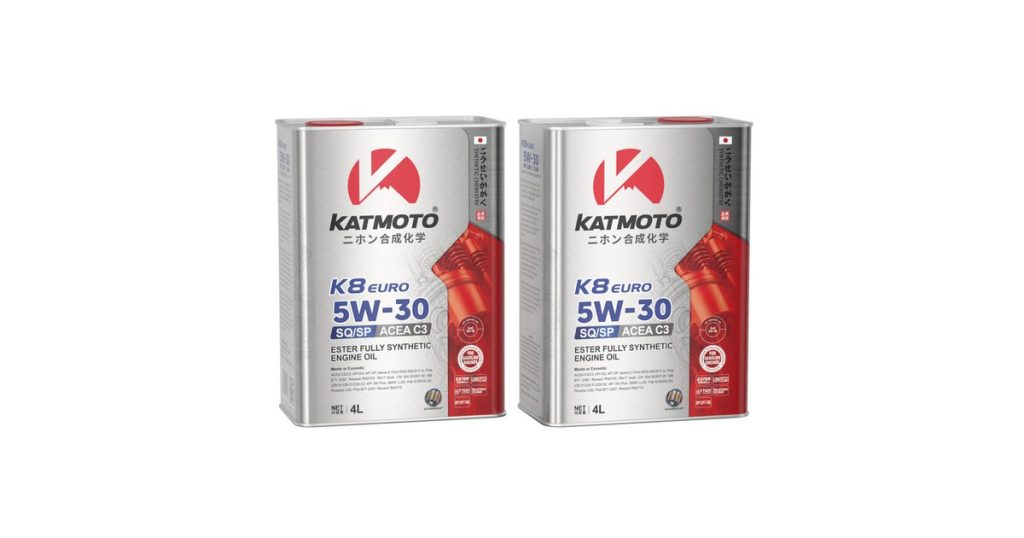
Use the KATMOTO K8 EURO 5W-30 product page as an example of where to start: it identifies the trade name, viscosity grade and published performance wording. For a real order, match that identity to the actual offered pack, the latest applicable documents and the approved market artwork. This example does not indicate that K8 EURO has changed or that any approval or API license has been verified for it. [4]
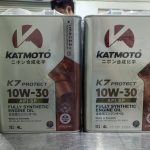
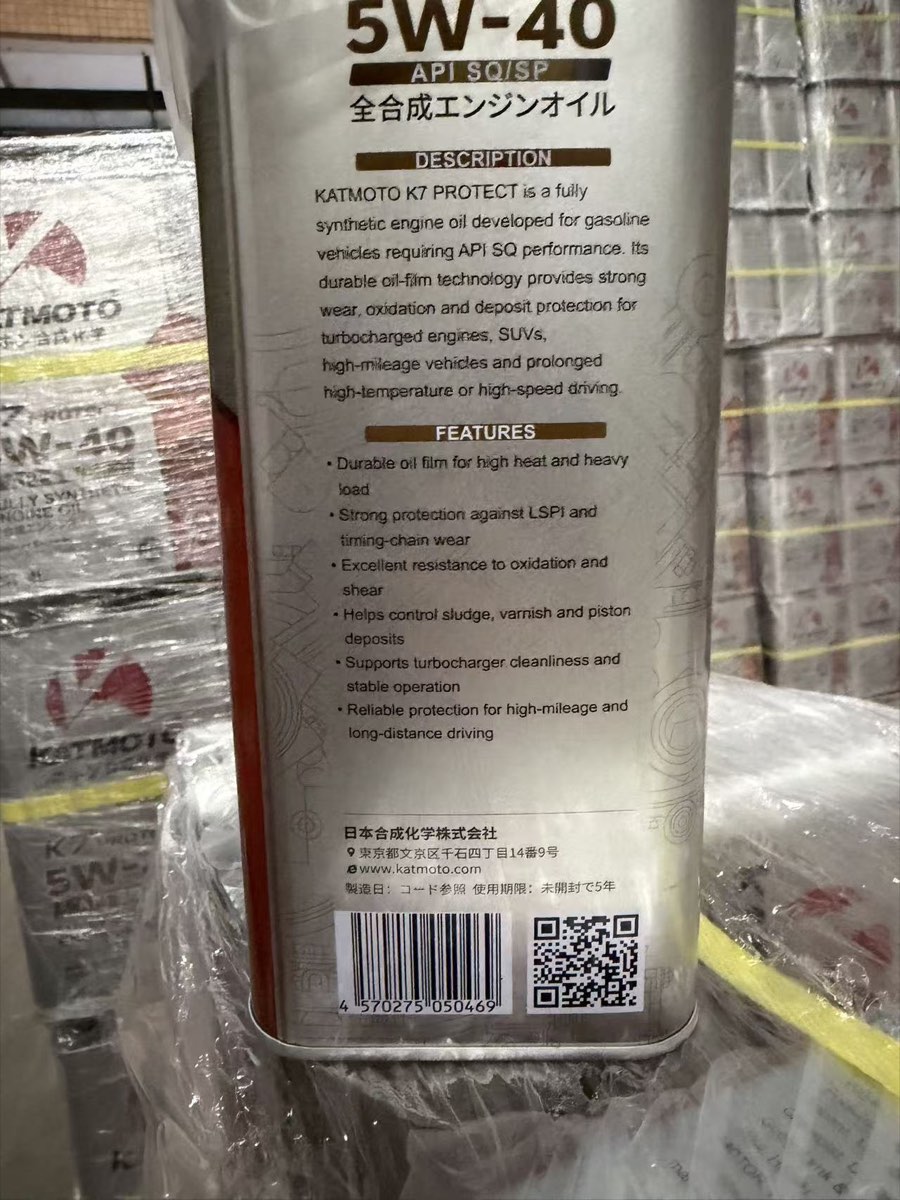
The photograph here shows the back label of a different SKU, K7 PROTECT 5W-40. It illustrates what a back-label photograph can document: the visible text and its placement. It does not establish the fill, prove a formulation change or validate the claims. Ask for the full artwork files as well as an unambiguous photo of the lot marking on the offered shipment.
Check barcodes at the right packaging level. Under GS1’s rule for declared formulation or functionality, a new GTIN is required when the change affects legally required pack information and the brand owner expects the difference to be distinguishable. Declared net content and pack/case quantity have their own rules; destination requirements take precedence. Do not read an unchanged barcode as technical approval. [3]
Make the cutover traceable by lot, not just by date
‘Effective next month’ is not enough to tell a receiver what will be on a mixed pallet. Ask which production or packing lots are the last old revision and the first new one, where the code is printed, and whether old stock will ship after the cutover date. If the supplier cannot name the first new lot yet, agree when it will be supplied and make that confirmation a release condition.
A lot of oil and a revision of artwork are not necessarily a one-to-one match. If packaging is introduced in stages, ask the supplier for a mapping the warehouse can use. For example, have the packing list identify the lots and revisions by carton or pallet where they are mixed. Decide in advance whether you accept both versions on one order, accept them only when segregated, or require separate order lines.
Avoid asking receiving staff to resolve a technical question at the dock. Give them an approved pack image, where to find the code, what the receiving document must show and who can release an exception. If the lot is wrong or the code is unreadable, quarantine the affected units under your process rather than moving them into available stock while the email chain continues.
| Field | Record | What receiving can check |
|---|---|---|
| Revision boundary | Last old and first new lots; lot-code location | Match marking to approved version |
| Order allocation | Old/new quantities and permitted mixing | Reconcile cartons or pallets to packing list |
| Exception owner | Named contact and hold/release rule | Keep unverified units out of available stock |
Record a decision that still makes sense at receiving
For a documented artwork-only change, the label owner can often approve a new proof without restarting a full qualification. For changes to oil identity, declared performance or approval status, involve the technical owner and check whether an updated safety data sheet, sample, agreed test or customer sign-off is needed. Compare the new revision to the requirements of that destination and customer. Do not assume every change needs the same tests—or that no change does.
A release can be limited. Approving only the named old lots for the current order may keep it moving while the new revision is reviewed, provided the supplier can segregate them and confirm the allocation. Conversely, if the current order cannot be identified by revision, postponing release is safer than letting an ambiguous line become a mixed-stock problem across several distributors.
Keep the decision with the purchase order. State which version may ship, what may not be substituted, whether mixing is permitted and how a deviation will be handled. Ask the supplier to acknowledge it on the order confirmation. The approved combination of product, artwork and lot evidence is what the warehouse needs, not an email saying ‘looks fine’.
Five checks before issuing the reorder
- Attach the last accepted specification and market artwork. Name the exact SKU and pack size.
- Ask for a dated old-versus-new summary, with explicit unchanged fields rather than a blanket ‘equivalent’ statement.
- Assign each affected field to its reviewer: technical, label, packaging or receiving. Request evidence relevant to the change.
- Confirm the lots, the permitted allocation and the paperwork that will identify each revision at arrival.
- Write the decision and any release conditions into the order; retain the supplier’s acknowledgement and the accepted evidence.
Questions importers ask about change notices
Does the same SAE grade mean the same oil?
No. An unchanged grade does not identify a formulation, a performance claim or its supporting evidence. Compare the supplier’s named revisions.
Do I need a fresh sample for a label redesign?
Not automatically. Confirm the change is genuinely artwork-only, then follow the customer’s rules and check the revised proof. A changed closure or declaration calls for a different review.
Can the old CoA release a new lot?
No. It records results for the identified lot. Ask for the batch-specific record and compare it against the agreed requirements.
Can old and new cans ship together?
Only if your purchase conditions permit it and the supplier can identify and allocate both versions. Use separate lines or segregated packing when required.
Does every formulation change require a new barcode?
No blanket rule applies. Check the two conditions in GS1 rule 2.2, any other applicable GTIN rules and destination requirements. [3]
What if the supplier cannot give a cutover lot yet?
Ask for the date when lot information will be known and hold release of the affected revision until you have a usable identification or another documented, accepted way to distinguish it.
Request the documents for your next order
Send KATMOTO your destination market, exact product and pack, prior revision, proposed order and the change you need to verify. Ask for the current applicable documents and written confirmation of the offered version. Packaging, minimum quantities and delivery should be confirmed in the quotation.
Sources and references
- American Petroleum Institute — API 1509, Engine Oil Licensing and Certification System, 24th edition (July 2026; amended 23 September 2026), American Petroleum Institute — API 1509, Engine Oil Licensing and Certification System, 24th edition
- American Petroleum Institute — EOLCS Directory of Licensees, American Petroleum Institute — EOLCS Directory of Licensees
- GS1 — GTIN Management Standard, release 1.1, sections 2.2, 2.3 and 2.6 (September 2023), GS1 — GTIN Management Standard, release 1.1, sections 2.2, 2.3 and 2.6
- KATMOTO — K8 EURO 5W-30 product information and application notice, KATMOTO — K8 EURO 5W-30 product information and application notice