Published: 26 October 2026
Quick answer
Compare dry with dry and wet with wet, using identified test methods and matching product documents. For DOT 4, FMVSS 116 sets minimum ERBP and wet ERBP values of 230°C and 155°C respectively; those thresholds are not a supplier’s batch results.[1] First establish the vehicle requirement, then ask what each quoted number actually represents.
One boiling-point figure is an incomplete quotation
A quotation says ‘high boiling point’ and lists a temperature. Another supplier lists two temperatures, but neither document identifies whether they are typical values or guaranteed limits. Which offer is stronger? At this stage, neither has given you enough information to make that comparison.
This is a narrower question than choosing between DOT 3, DOT 4 and DOT 5.1. Once DOT 4 is the required category, the buying task is to compare evidence for a particular product, not to reward the largest number in a spreadsheet. Leave an unlabelled result in a clarification column until its basis is established.
Use separate columns for the product code, document revision, dry result, wet result, method and status of each value. Keep the supplier’s exact wording beside your own interpretation. That small discipline makes it easier for purchasing and technical staff to discuss the same offer without silently changing its meaning.
What dry and wet ERBP actually describe
ERBP means equilibrium reflux boiling point. The dry result concerns the fluid tested before the prescribed wet conditioning. The wet result follows controlled humidification; it is not simply a second reading from an opened bottle. FMVSS 116 describes the two procedures separately in S6.1 and S6.2.[1]
Treat these as different test conditions, not interchangeable claims. Do not turn a wet laboratory result into an assumed number of months in a vehicle, or convert the difference between dry and wet figures into a replacement interval. A procurement comparison cannot establish how an individual car has been maintained.
The table below gives the two DOT 4 boiling-point thresholds from the U.S. standard. It is a limited reference, not a complete compliance checklist and not a statement of KATMOTO production results. Other destination markets and vehicle applications need their own specification review.[1]
| Comparison field | Minimum in this standard | Meaning for the buyer |
|---|---|---|
| ERBP (dry) | 230°C /446°F | Compare with an identified dry result, not a wet result. |
| Wet ERBP | 155°C /311°F | Compare with the prescribed wet-conditioned result. |
| Scope of this table | Two boiling-point requirements only | Not complete conformity, vehicle approval or batch-release evidence. |
Make the two supplier offers genuinely comparable
Ask for the method designation and its edition, not just ‘tested’. If one document cites ISO 4925 and another cites FMVSS 116, have the technical contact explain the claimed basis and provide the relevant report. A shared unit does not, by itself, establish that the reported tests and reporting conventions are equivalent.
Next check the identity chain. The quotation, TDS, sample label and report should identify the same product or have a documented explanation of their relationship. A report for an unnamed development sample should not quietly become evidence for every bottle carrying a similar marketing name.
If a result sits close to your agreed acceptance limit, ask how the laboratory’s uncertainty and the contract’s decision rule will be handled. Settle that before ordering or retesting. Do not improvise a rejection threshold after delivery, and do not compare rounded figures as though every last degree were a meaningful product difference.
Typical value, batch result and purchase limit are different commitments
A TDS helps describe a product. A batch report identifies results for the sample and lot it actually covers. A purchase specification records what buyer and seller have agreed to accept. Those documents can support one another, but none should be renamed to stand in for the others.
When a data sheet says ‘typical’, retain that qualification in your catalogue notes and internal comparison. If the quotation needs a minimum requirement, ask the supplier to confirm it explicitly and state how conformity will be assessed. A sales spreadsheet is not the place to create a guarantee that the supplier has never offered.
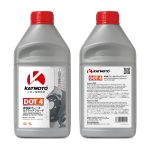
KATMOTO’s DOT 4 product page labels its property table as target typical values and directs buyers to the official TDS and laboratory report for final production data. Use that page to identify the product and start the document request, not as a substitute for batch evidence or an official OEM approval.[3]
A higher boiling point does not settle vehicle suitability
The vehicle specification remains the starting point. For example, Volvo’s published guidance for the 2019 V60 includes ISO 4925 Class6 in its prescribed brake-fluid requirement.[2] That model-specific example shows why a plain DOT 4 name is not enough to assign a product to every passenger car. It does not establish KATMOTO suitability for that Volvo.
Ask the technical team to check the complete application requirement, including any named low-viscosity class or OEM specification. A positive answer about boiling point leaves the rest of that review open. Likewise, a claim that a fluid can mix with another category is not permission to recommend a different service fill.
Keep the catalogue wording restrained until the supporting documents are available. ‘DOT 4 product for review’ is more useful than an unsupported universal-fitment promise. This guide is for product selection and procurement; vehicle diagnosis, fluid replacement and service intervals belong with the applicable manufacturer information and a qualified workshop.
What to request before approving an import order
Send one RFQ sheet that separates the intended vehicles, destination market, technical evidence and commercial questions. Ask the supplier to identify which requested documents are available and which points remain open. An unanswered box is easier to resolve than a confident sentence assembled from several unrelated brochures.
For a sample programme, agree who selects the samples, how they are sealed and identified, which laboratory receives them, and what question the testing is intended to answer. Keep an approval sample’s identity connected to the proposed production product. None of this requires inventing a universal sampling rule or assuming that one test releases every future lot.
At receipt, compare the delivered product and lot identifiers with the approved order and documents. Record damaged seals, illegible codes or mismatched product names for review before the affected stock enters saleable inventory. Ask for the product’s storage instructions rather than creating a shelf-life claim from a photograph or an invoice date.
The following checklist is a proposed purchasing control, not a list of promises about documents supplied automatically by KATMOTO. Packaging options, MOQ, lead time and testing arrangements must be confirmed in the actual quotation.
| Request or check | Evidence to retain | Question to resolve |
|---|---|---|
| Product identity | Code, pack label, TDS revision | Do quotation and report concern the same product? |
| Dry and wet data | Result, unit, method, value status | Typical figure, measured sample result or agreed limit? |
| Application review | Vehicle specification and support documents | Any additional class or OEM requirement? |
| Order acceptance | Written limits and decision process | Who handles retests and disputed results? |
| Delivered stock | Lot identification, closure and document match | Any mismatch to quarantine for review? |
| Commercial offer | Confirmed pack, MOQ and lead time | What is actually included in this quotation? |
A practical route from quotation to approval
- Define the buying question: list the destination market, target vehicle requirements and the exact product being considered. Do not start with a preferred boiling-point headline.
- Collect the current TDS and supporting report; map dry and wet figures into separate fields. Flag missing methods, sample identities and unexplained document revisions.
- Have the responsible technical contact close the application and evidence gaps. Agree any purchase limits, sampling, test costs and dispute procedure in writing before order approval.
- Approve only the documented product and terms. At receipt, match the delivered identity and records, retain the evidence file, and refer discrepancies for a specific decision.
Questions importers ask
Which matters more: dry or wet boiling point?
Neither replaces the other. They describe different conditions, so keep both in the comparison and assess them against the required specification. Do not rank two fluids from a single headline result.
Does wet boiling point tell us when a car needs new brake fluid?
No. Do not convert a laboratory-conditioned figure into a universal service interval. Check the maintenance information for the actual vehicle and market; a product buying guide cannot assess the condition of fluid in a particular car.
Can we publish a TDS typical value as a guaranteed minimum?
Not without explicit supporting agreement. Preserve the original qualification, obtain the current documents and ask the supplier to define any minimum being offered. Your sales copy should not make a stronger promise than the evidence.
Is a high dry result enough to claim OEM approval?
No. A boiling-point result does not establish an approval. Ask for the evidence supporting the exact approval claim and keep it separate from general performance wording or an application recommendation.
Should two different test-method names be treated as identical?
Not automatically. Request the precise method, edition and reporting basis, and have the technical contact explain comparability. If a purchase depends on the comparison, resolve it before agreeing an acceptance limit.
What should an importer send KATMOTO first?
Send the destination, required vehicle specifications, proposed pack and estimated quantity, plus the data or documents you need to evaluate. Ask for a product-specific quotation and current supporting information rather than assuming availability or commercial terms.
Compare the evidence before choosing the quotation
Review the KATMOTO DOT 4 product, or use the broader grade guide if your stocking category is still undecided. For a purchasing discussion, send your application list and the documents needed for approval. KATMOTO product information is a starting point for that review, not a blanket vehicle recommendation.
Sources & references
- U.S. eCFR — 49 CFR571.116, Motor Vehicle Brake Fluids; S5.1.1–S5.1.2 and S6.1–S6.2 (Current display through22 October2026; accessed26 October2026), U.S. eCFR — 49 CFR571.116, Motor Vehicle Brake Fluids; S5.1.1–S5.1.2 and S6.1–S6.2
- Volvo Cars — V60 2019: Brake Fluid Specifications (Updated19 March2020; accessed26 October2026), Volvo Cars — V60 2019: Brake Fluid Specifications
- KATMOTO — Brake Fluid DOT4: Product Information and Application Notice (Accessed26 October2026), KATMOTO — Brake Fluid DOT4: Product Information and Application Notice