Published: 23 October 2026
Quick Answer
ASTM’s public catalogue lists D4485-26d as active, with a last-updated date of 19 October 2026. Use that dated reference to review your purchase file, not to assume that an oil has changed formulation, gained an API license or acquired an OEM approval. Ask which edition your order requires, whether the supplier’s evidence addresses that requirement and whether any agreed product or label change is actually needed. [1]
Start with what the dated record actually establishes
A new standards suffix can turn a routine engine-oil quotation into an awkward question: should the order stay as it is, or should every document now carry the new reference? The useful first step is to identify the requirement already agreed. Updating a catalogue entry and changing the basis of a purchase are different events.
On 23 October 2026, ASTM’s public D4485 page identifies D4485-26d and displays 19 October 2026 as its last-updated date. The standard concerns performance of active API service-category engine oils. This is a timely document-control prompt for buyers. The catalogue date is not presented here as a legal commencement date or a universal deadline for relabelling existing stock. [1]
This guide uses the public catalogue information, not a purchased full standard or revision redline. It does not claim to identify clause-by-clause changes in D4485-26d. If a particular change will decide acceptance of an order, the responsible technical team needs the applicable full text and a comparison with the agreed previous edition. A summary should not fill that gap with guesses.
Keep the specification, test evidence and license in different boxes
The ASTM D4485 engine oil specification is one part of a larger requirements picture. API explains that its licensing program is described in API 1509 and references standards including ASTM D4485 and SAE J300. Those references do not make every use of a standards number an API license. EOLCS separately authorizes qualifying marketers to use API quality marks. [2]
For a buyer, the distinction is practical. A test report answers the tests, sample and conditions identified in that report. A performance statement expresses a supplier’s claim. A license concerns the authorization being claimed under its own program. An OEM approval, if requested, needs its own product-specific evidence. One document can help explain another without replacing it.
Avoid a purchase description such as ‘latest ASTM, API approved’ when nobody has defined the product, category, viscosity or evidence. It leaves warehouse, sales and technical colleagues to interpret the phrase differently. Write down the intended claim and its verification route before turning it into label copy. A newer edition suffix alone cannot close those questions.
| Item in the file | What to verify | What it does not replace |
|---|---|---|
| ASTM edition reference | Exact designation and the order’s required edition | Product-specific evidence or a license |
| API category and viscosity wording | Exact oil and intended application | Authorization to display an API mark |
| Technical or test report | Product/sample identity, test scope and relevant revision | Every untested claim or OEM approval |
| Claimed license or OEM approval | Current authorization for the exact claim and product | Vehicle-specific application checks |
Decide whether this order has a fixed edition or a moving reference
Read the quotation, purchase order and technical attachment together. Is a dated edition stated? Does the wording refer to the current edition, and if so at which point in the order process? Or does it only name an API category and vehicle application? The answer determines what needs clarification. Do not silently replace an agreed reference because a search result now shows a newer document.
A hypothetical RFQ might ask a supplier to identify the D4485 edition used in its technical assessment, explain any difference from the buyer’s stated baseline and list the supporting documents for the exact oil. That is more useful than requesting a newly dated certificate without saying what it must demonstrate. It also gives the supplier room to explain when an edition change does not require a product change.
Where the contract wording or destination-market requirement is unclear, have the responsible commercial, technical or regulatory adviser resolve it before promising a release date. This article does not decide the legal effect of a standards reference. The proposed control is simpler: record the question, who must answer it and which order line remains affected.
Make the evidence follow the exact product, not just the brand
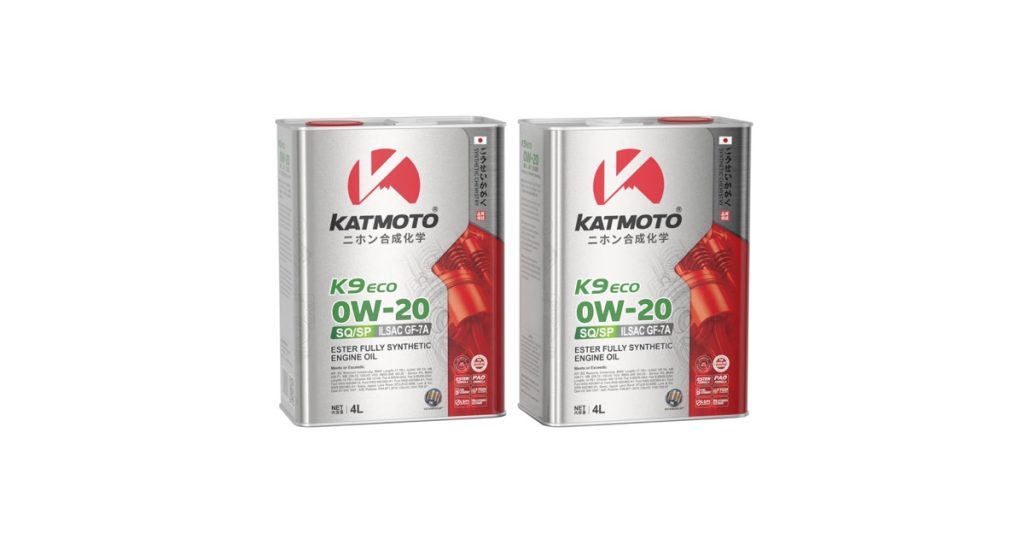
Take KATMOTO K9 ECO 0W-20 as a product-identification example. Its public page lists SAE 0W-20, API SQ/SP and ILSAC GF-7A wording. It also instructs buyers to follow the vehicle manufacturer’s viscosity and specification requirements, with restrictions on other viscosity or high-HTHS applications unless approved. Those published details help define the enquiry; they do not independently establish D4485-26d conformity, API licensing or an OEM approval. [3]
Ask for the evidence behind the exact statement your order will carry. Identify the full product name, viscosity, relevant document revision and the product or formulation reference used by the supplier. If a technical report concerns another product, a different formulation or a limited test scope, ask how it supports the requested claim. A brand-wide assurance is not a substitute for that link.
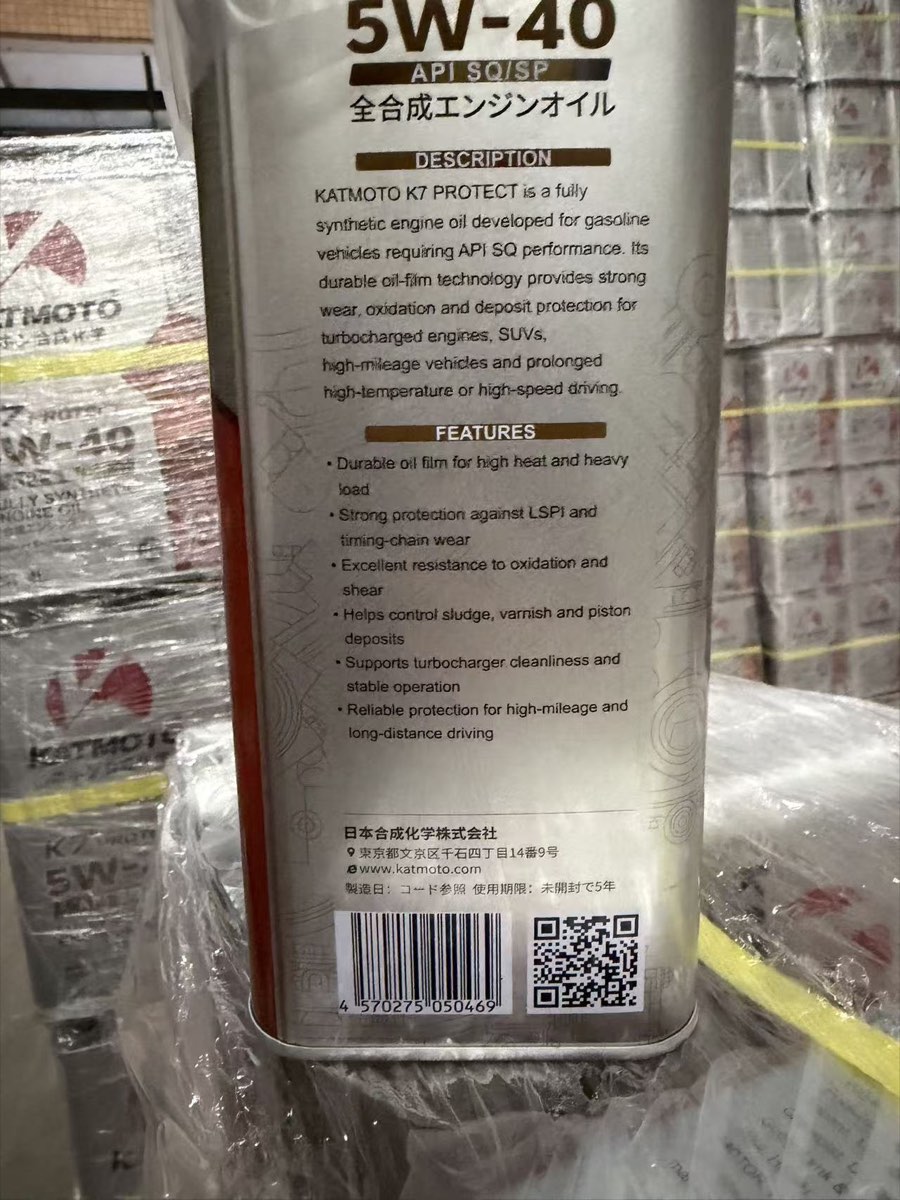
The photographed K7 PROTECT 5W-40 side label below is a different product from K9 ECO 0W-20. It illustrates why printed claims should remain linked to an identifiable product and agreed artwork. The visible API SQ/SP wording does not prove licensing, a new standards assessment or a production change. No factory ownership, shooting date or current inventory is established by the scene.
Ask for a change explanation before requesting new artwork
Have the supplier separate a document-reference update from changes to formulation, performance wording, pack identification or application advice. Ask what changed, why it affects your order and what evidence supports the proposed wording. The answer may be a technical clarification rather than a redesigned can. Do not assume a new standard requires a new formulation, or that an unchanged formulation automatically satisfies every new requirement.
If a change is proposed, retain the prior approved version and the proposed replacement. Record which SKUs and orders it affects, who checks the technical statement and who approves the commercial artwork. Do not overwrite old files in a shared folder and leave sales teams guessing which label is current. Keep the decision visible to anyone preparing catalogues, translated labels or distributor listings.
When a required claim remains unsupported, identify the narrow open item and obtain a responsible decision before approving that claim or releasing the affected order. An unanswered evidence question is not, by itself, proof that the oil has failed a test. Equally, the absence of visible changes to a can does not settle the technical question. Keep the language proportional to what is known.
| Record | Buyer’s question | Decision to retain |
|---|---|---|
| Order baseline | Which edition or category was agreed? | Confirmed reference and affected order lines |
| Supplier assessment | Does the proposed evidence address that baseline? | Technical explanation and remaining evidence gaps |
| Product or formulation identity | Is the evidence for the exact oil being supplied? | Identifiable linkage or a documented limitation |
| Artwork and translated claims | Is a wording change needed and approved? | Prior and replacement revisions with approval scope |
| Order disposition | Who can approve any exception or release? | Responsible decision, quantities and restrictions |
Close one controlled file, rather than collecting more certificates
The useful result is a short record connecting the applicable requirement to the product, the reviewed evidence and the final decision. Include any exception or unresolved restriction. If the edition reference changes after the order is placed, preserve who agreed to the change and when; avoid making a later document look like the original basis of purchase.
Repeat the agreed decision across the RFQ response, technical attachment and approved sales wording. Six translated versions of an unsupported claim are still one unsupported claim. Translators should retain standard identifiers accurately and work from the approved statement, not independently strengthen ‘meets requirements’ into ‘officially approved’.
Five questions to send with the next RFQ
- What exact edition, API category, viscosity and application form the agreed requirement?
- Which identifiable product and supplier documents support the requested statement?
- Has the supplier compared the relevant editions, and is a product or wording change actually proposed?
- Which artwork, language versions and order lines would a change affect?
- Who will record the final technical and commercial decision before the affected claim or order is approved?
Frequently Asked Questions
Is D4485-26d a new API engine oil category?
Do not treat the document designation as a new category. ASTM lists it as an edition of its engine-oil performance specification. API’s category and licensing information must be checked separately. [1] [2]
Does the 19 October date create a relabelling deadline?
The public page supplies a last-updated date. It does not establish a universal legal or contractual deadline for your stock. Check the actual applicable requirement before making that claim.
Can a supplier just replace the edition number on a certificate?
A new reference needs a defensible basis for the exact statement. Ask what was reviewed and which evidence supports it; a newer date alone does not provide that explanation.
Must every formulation change when a standard is revised?
Do not assume either a mandatory change or automatic conformity. Ask the responsible technical team to assess the actual revision against the product and order requirement.
Does the K9 ECO product page prove API licensing?
No licensing conclusion is made here. The page’s performance wording and application advice identify the enquiry; any claimed license requires separate verification through the appropriate program. [2] [3]
What if the full standard or comparison is unavailable?
Keep the technical question open rather than inventing the change. Obtain qualified review of the applicable text before approving an unsupported claim or deciding the affected order’s disposition.
Define the claim before asking for a quotation
Send KATMOTO the destination market, required viscosity and application, exact performance wording and any dated standard reference in your buying file. Ask for the relevant product documents and clarification of the claim you need to assess. Distributor discussions can include controlled technical and label updates without assuming a particular license, approval, price or delivery commitment.
Sources & References
- ASTM International — D4485-26d: Standard Specification for Performance of Active API Service Category Engine Oils (Catalogue updated 19 October 2026; accessed 23 October 2026), ASTM International — D4485-26d: Standard Specification for Performance of Active API Service Category Engine Oils
- API — Engine Oil Licensing and Certification System (EOLCS) (Accessed 23 October 2026), API — Engine Oil Licensing and Certification System (EOLCS)
- KATMOTO — K9 ECO 0W-20 Product Information and Application Notice (Accessed 23 October 2026), KATMOTO — K9 ECO 0W-20 Product Information and Application Notice