Published 2026-11-20
Quick answer
An importer asks for a local language back label on a 4 L can that already sells in another market. The oil and fill quantity stay the same. Can the supplier print the existing barcode? Possibly. A country boundary by itself does not force a new Global Trade Item Number (GTIN). First establish whether the two finished packs can be supplied in place of one another in the intended channels, and check the actual change against the applicable GS1 rules, local requirements and partner specifications. A change in declared net content has its own rule, as does a change to the number of units in a case. Make the retail and case decisions separately before signing off on the artwork. [1][2]
Identify what changed
Put the last approved print proof next to the proposed one. Mark each difference. A new translation, importer name, viscosity grade, performance statement, certification symbol and fill quantity are six different decisions, even if they all appear on the same back panel. Write down the current and proposed primary brand, product, declared net content, market, sales channel, case count and artwork revision. A filename such as “EXPORT FINAL” will be hard to trace six months later when a warehouse opens a carton from the earlier run.
GS1 asks whether customers or trading partners need to distinguish the item, whether a change affects required disclosures, and whether it materially affects supply chain handling. The standard then gives specific rules for defined changes. For a language or importer sticker, check whether a retailer or warehouse could correctly fulfill an order with either version and whether either version is suitable for that destination. If one version omits a declaration needed in that market, do not treat the packs as equivalent just because their barcodes scan. Ask the party responsible for assigning the GTIN to record the ruling, and resolve destination and customer requirements before the printer receives the files. [1][2][3]
Decide which packaging level needs a new number
An internal SKU identifies an item in your own system. The GTIN identifies the trade item for exchange with partners. The artwork revision identifies the approved print file, and the lot code helps trace a production batch. Keep those fields separately. Two artwork revisions can share a GTIN when the trade item decision permits it, but a distributor may still need to segregate the versions for a limited transition.
The examples are hypothetical. GS1’s rules for declared net content, case quantity and certification marks cover the changes shown here. Check other changes separately, including a different primary brand or a declared formulation or functionality change. If several attributes change together, review all the applicable rules. [1]
Consider a distributor that orders both four-can and six-can cases from the same supplier. If the carton code and item master still point to four, an otherwise successful warehouse scan can book four units against a carton containing six. The discrepancy may only surface when the distributor reconciles inventory or invoices. The carton order record needs the case identifier, the quantity it represents and the unit GTIN it contains. A photo of the front label alone cannot validate those fields.
| Proposed change | Retail unit | Case or higher level | What to document |
|---|---|---|---|
| Typography corrected without changing the product or its declared information | Existing GTIN may remain following review | Existing case identification may remain if case configuration is unchanged | Old and new proofs and the artwork revision date |
| Destination-specific language or importer details | Assess substitution, destination requirements and how the versions are ordered before deciding | Check whether each case must be distinguishable in ordering and receiving | Target channels and markets, approved label text and GTIN owner’s decision |
| Declared fill changes from 4 L to 5 L | New GTIN under the declared net content rule | Assign new GTINs at existing packaging levels above the base unit under the rule | New nominal fill, product records, label and case data |
| Same retail unit, carton quantity changes from four cans to six | Existing retail GTIN can stay if the retail unit has not changed | Identify the new case and applicable higher configurations under the case quantity rule | Both case quantities, their GTINs and the first shipment for the new configuration |
| A certification mark is added or removed | Check whether the rule for a mark meaningful to regulators, trading partners or consumers applies | Check the corresponding hierarchy requirements | Proof of authorization where applicable and the affected packaging levels |
Keep label claims with their evidence
The translator should have a short list of language that needs technical approval before it changes. That list typically includes the brand and product name, viscosity grade, application restrictions, claimed performance levels and approval wording. Check each statement against the current product documents for that exact grade and label. If a revised sentence changes a general performance claim into a formal approval, stop the proof until someone establishes that approval.
For the API engine oil marks, API distinguishes the right to display a mark from a performance statement. Verify the marketer, brand, viscosity and relevant listing, and check the applicable branding guidance before approving a mark. A barcode lookup, an old package or a listing for a nearby viscosity provides no independent basis for adding a mark to the revised label. For the licensing evidence to request, see KATMOTO’s API licence verification guide. [4][5]
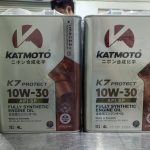
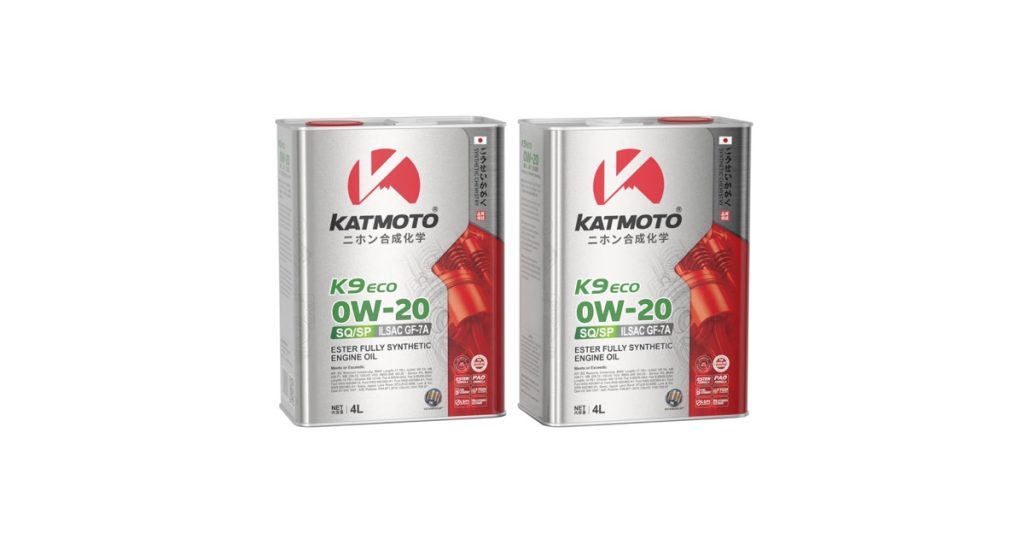
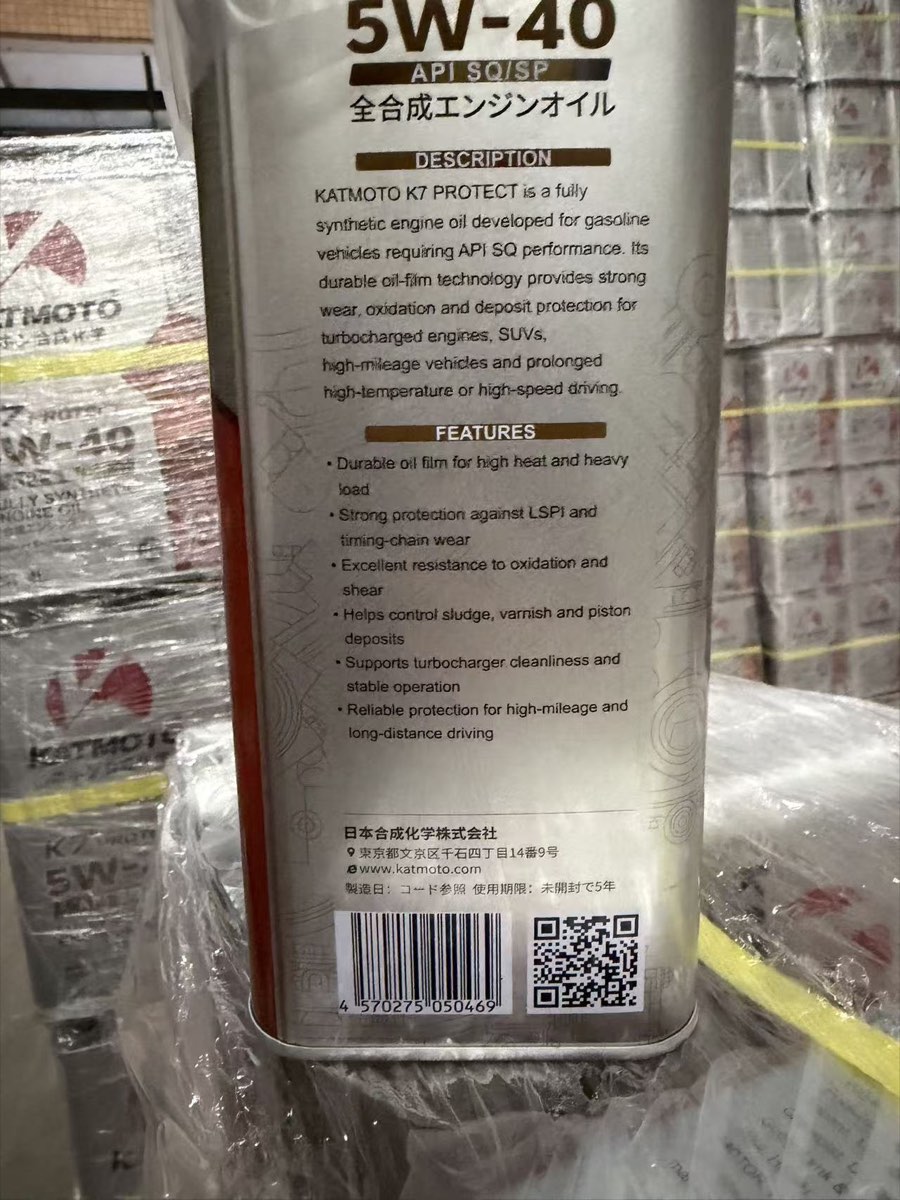
The image here shows the side label of a KATMOTO K7 PROTECT 5W-40 can. It is included to show where a buyer can find the grade, printed descriptions and a barcode on a physical package. The separate featured photograph shows K9 ECO 0W-20 in 4 L metal cans. Keep each product’s photos and artwork on its own SKU record. A photographed label does not verify a current licence or prove that a proposed design is valid in another market.
Release the artwork and product data together
Approval is simplest when the importer, supplier and receiving team work from one version record. Include the final proof for every printed surface and the corresponding case label. Have the product or regulatory owner check the text. The GTIN decision belongs with the organisation responsible for identifying the trade item, which can be an importer marketing its own label. The warehouse or trading partner should confirm that its systems will read the retail and case identifiers as intended. [3]
For the printer, retain a read-only set of approved PDFs and make the approved revision easy to retrieve. If an emergency reprint is needed, confirm which revision is released for the destination before the print order goes out. When the retailer, shipper and importer publish separate product records, assign one person to reconcile changes across those records. A new case number is of little use if the ordering system still sells and invoices the old number.
Release checklist
- Freeze the pack description. Confirm brand, viscosity, target market, volume, approved claims and units per case. Link the current technical and safety documents. Keep the baseline proof for comparison.
- Record the decision for each packaging level. State the retail GTIN and case GTIN, whether each is retained or replaced, what rule informed the decision and who approved it.
- Sign off a physical proof. Scan the barcode on the finished pack and carton. Compare the decoded values to the product master and printed digits. Check that a sticker or seam does not obscure any information needed for that market, including the batch code or the code a warehouse is supposed to read. Where a partner specifies barcode verification, follow its required check as well.
- Agree on a cutover. Define the first applicable purchase order, shipment or lot. Tell the distributor which old stock may still be sold into each market and which must be segregated. Update product data, ordering and receiving records before dispatch.
- Check the first shipment. Ask the receiving team to scan a retail unit and case, count the contents and compare the observed artwork revision where identifiable with the approved proof. Resolve unexpected records before stock is distributed.
Questions from importers
Can one GTIN be used in two countries?
Yes, when it identifies the same trade item and the planned distribution is suitable for both markets. If two market packs coexist and one cannot fulfill the other’s order, document that distinction before committing to the same number. [1][2]
Does a translated label automatically need its own GTIN?
No. Check what changed beyond the words and whether the final packs are interchangeable in the intended route to market. Retain the translated proof and the allocation decision even if the number stays the same. [1][2]
Can we keep a GTIN when we change the declared volume?
Under GS1’s declared net content rule, a change in the legally declared net content on the pack requires a new GTIN. Review the higher packaging levels at the same time. [1]
What if only the case count changes?
Keep the unchanged retail unit identification and apply GS1’s case quantity rule to the case and applicable higher configurations. Update the ordering unit conversion in the distributor’s system. [1]
Who supplies the number for private label engine oil?
Start with the organisation responsible for the branded trade item. In a private label arrangement that may be the importer or wholesaler. Confirm the assignment responsibility with the brand owner before barcode files are produced. [3]
Does a successful scan validate an API claim?
No. Scanning checks the encoded identifier. Verify any licensing claim or mark separately against API’s programme requirements and the relevant listing. [4][5]
Contact KATMOTO about packaging
For the broader physical sample process, use the engine oil sample approval guide. To discuss the exact pack, send KATMOTO the destination, grade, net fill, case count, current and proposed proofs, and the intended first shipment. Contact KATMOTO or apply to become a distributor.
Sources & References
- GS1 — GTIN Management Standard (Release 1.1, 2023-09), GS1 — GTIN Management Standard
- GS1 — Using the same GTIN in a different country (2025-05-29), GS1 — Using the same GTIN in a different country
- GS1 — Who is responsible for numbering trade items?, GS1 — Who is responsible for numbering trade items?
- API — EOLCS and DEF Certification Branding Guide, API — EOLCS and DEF Certification Branding Guide
- API — Certification Directories, API — Certification Directories