Published 16 November 2026
Quick answer
Do not approve a coolant order because its colour matches the fluid in a reservoir. Colour can help identify a named product within a documented range, but it does not establish compatibility across brands, specifications or vehicle circuits. Start with the vehicle’s coolant requirement, match the exact product and supplied concentration, and confirm the permitted top-up or replacement procedure. Neither an OAT description nor an ASTM reference makes every similarly coloured coolant interchangeable.
Turn ‘the red coolant’ into an identifiable requirement
Consider a hypothetical RFQ asking for ‘red long-life coolant for Japanese cars’. It sounds specific until the buyer has to approve a substitute, investigate a return or train a workshop. Red describes appearance. ‘Japanese cars’ does not identify the engine, model year or cooling circuit. Before quoting, ask which vehicle requirement the customer is trying to satisfy.
Build the enquiry around the exact OEM specification or fluid designation, intended vehicles and circuit, product name, and whether the supply is concentrate or ready-to-use. Add colour as a secondary identification field. If the customer cannot supply the requirement, record that gap instead of allowing a colour photograph to become the specification by default.
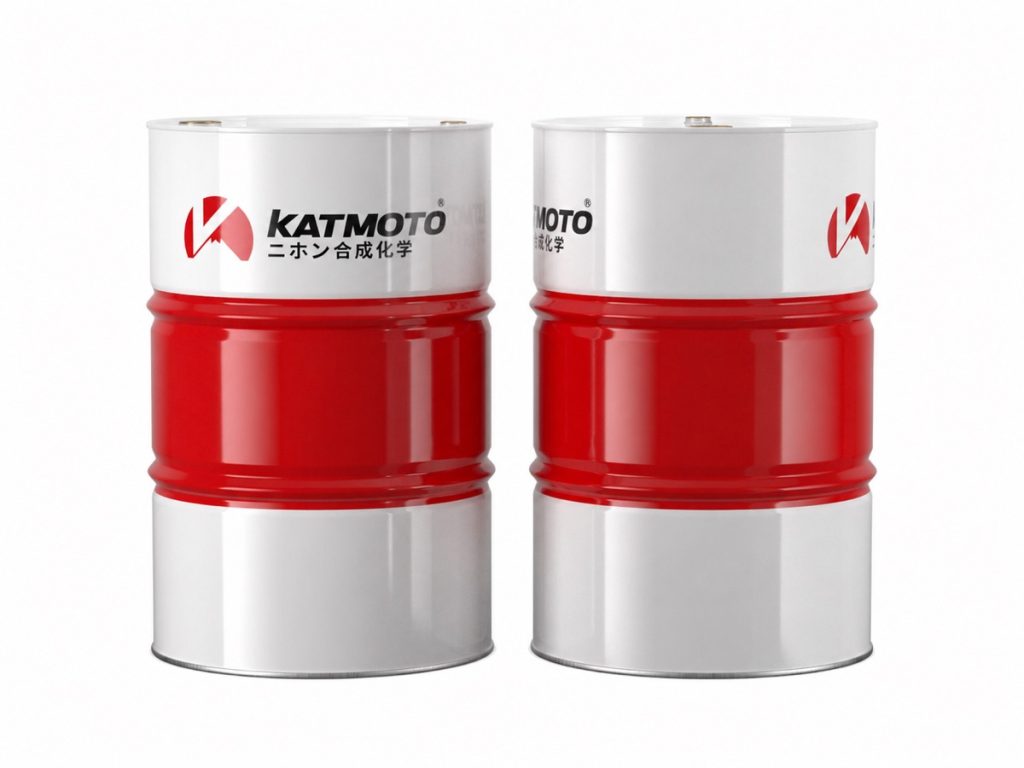
This distinction matters when a purchasing list becomes a distributor catalogue. A shorthand description that works between two people can become an unsupported fitment promise when copied into a marketplace listing. Keep the application wording tied to its evidence and preserve any exclusions. Do not replace a narrow product description with ‘all red-coolant vehicles’. The illustration on this page shows branded drums, not a verified coolant SKU, liquid colour or pack-size offer.
What matching colour does—and does not—tell you
Two products can look alike without supplying the same application evidence. Conversely, a documented appearance change need not mean a new product identity. Ford’s engine-coolant guidance gives a vehicle-specific example: slight darkening during service does not itself require replacement when its stated conditions are satisfied. That is not a general pass criterion for every coolant or vehicle. [1]
Ford’s published position on universal coolants also rejects the assumption that one fluid has been proven suitable for every vehicle and warns against mixing except under specified conditions. [2] Treat that as an OEM application boundary, not as evidence that an aftermarket product is automatically defective. Your task is to establish the permitted fluid for the intended vehicle, not to rank dyes.
Avoid constructing a universal chart in which green always means one chemistry and red always means another. For a distributor’s own range, an approved colour code can be useful warehouse shorthand, provided each entry resolves to an exact SKU and technical file. That internal convention must not silently become a cross-brand mixing rule. Keep the underlying specification visible to sales and technical staff.
| What the buyer sees | What is still missing | Purchasing response |
|---|---|---|
| Same red or pink shade | Exact fluid requirement and product evidence | Match specification and SKU before substituting |
| OAT on both descriptions | Circuit suitability and permitted mixing | Review application documents separately |
| ASTM D3306 reference | Exact claim, supporting evidence and OEM requirement | Do not infer universal fitment or approval |
| Different shade on receipt | Product, lot and documented appearance basis | Hold the uncertainty for clarification |
Read chemistry, standards and approval wording separately
OAT is useful information about inhibitor technology, but it is not a complete application approval. ASTM D3306-21 covers glycol-base engine coolants for automobile and light-duty cooling systems. Its scope distinguishes supplied forms; it is not a blanket statement that any two products carrying the designation can be mixed or used in every circuit. [3]
Ask what a supplier means by each claim. ‘ASTM D3306-style’, a statement of meeting a specification, an OEM suitability recommendation and formal OEM approval are different descriptions. Request evidence appropriate to the wording and keep the original document. Do not upgrade a supplier’s recommendation into an approval badge in your own language version or sales sheet.
For a disputed substitution, a proposed comparison file should identify the original product, proposed replacement, target application, relevant documents and unresolved questions. A neat spreadsheet does not resolve missing technical evidence. Mark the decision pending and obtain a qualified assessment before releasing a cross-reference. Commercial urgency does not turn colour similarity into permission to mix.
A KATMOTO example: pink/red is one field, not the whole selection
KATMOTO’s Long Life Coolant -35°C page describes a ready-to-use ethylene-glycol OAT product and lists pink/red appearance. It tells buyers to confirm OEM compatibility and states that suitability is not formal approval unless separately certified. [4] These are published product-information statements, not independent batch results. Request the current official TDS and application clarification for the order.
EV-LC 100 has a separate product identity and is positioned for applications requiring a low-conductivity ethylene-glycol EV coolant. [5] Do not transfer that positioning to Long Life Coolant -35°C because both mention glycol or OAT. Nor should a website category, drum illustration or freeze-point name be treated as proof that a fluid fits a battery or power-electronics loop.
Keep the two enquiries separate: one asks whether a product matches the specified engine-cooling application; the other may ask for additional circuit-specific properties and evidence. Ask the vehicle or equipment manufacturer which requirement governs. This guide establishes no KATMOTO OEM approval, universal compatibility, verified conductivity result or guaranteed service interval.
What belongs in the purchase file before stock is released
Use an item description that can survive a staff change: brand, exact product, SKU, supplied form, required specification and intended application. Attach the agreed label revision and technical documents. The relevant colour belongs in the record too, but as an identification attribute rather than an independent acceptance test. Agree how an unexplained appearance difference will be investigated.
For incoming stock, compare the delivered label and lot details with the order before approving a colour-based shelf location. Keep uncertain products segregated and preserve the supplier’s response. Where sampling is needed, arrange a suitable procedure with competent personnel; this article is not a sampling or vehicle-repair instruction. A photograph helps document what arrived, not what its chemistry must be.
A receiving team should also know who can authorise a replacement and what evidence is required. Do not let a warehouse relabel a product into another coolant family to satisfy a colour request. If the sales team needs a simpler catalogue, use clearly bounded application groups with links to the supporting data, not a promise that one colour covers an entire regional vehicle fleet.
| Field | Record explicitly | Avoid |
|---|---|---|
| Application | Vehicle, model year and cooling circuit | ‘For all Japanese cars’ |
| Requirement | OEM specification or exact fluid designation | Colour alone |
| Supply form | Concentrate or ready-to-use; product instructions | Assumed dilution |
| Proposed change | Original and replacement product documents | Verbal universal-mixing assurances |
| Authority | Evidence, limitations and responsible decision owner | Unverified approval wording |
Keep top-up advice separate from a full replacement decision
An unopened replacement product and the unknown liquid already in a vehicle are different evidence problems. Confirm the existing fill identity and the vehicle’s current service instructions before advising a top-up or changeover. A clear sample in a jar is not proof of compatibility, corrosion protection or remaining service life. Do not invent a universal flushing procedure or a mixing percentage from this guide.
The Ford guidance cited here requires the correct specification, restricts mixing and warns against opening a hot cooling system. [1] Refer actual service work to the applicable manual and qualified personnel. A purchasing article should never encourage a customer to open a hot reservoir merely to compare colours, or to trial an unverified mixture in a working engine.
For distributor support, log the product identity, vehicle information, affected circuit, existing fill if known, photographs and the exact question. Reply with the relevant document and its limitations. If identification remains uncertain, say so. A bounded answer may require another exchange, but it leaves a much clearer record than an unsupported ‘same colour, no problem’ assurance.
A five-step compatibility enquiry
- Identify the intended vehicle and cooling circuit; obtain its required fluid specification.
- Name the exact original and proposed products, including supplied form and current documents.
- Separate colour and chemistry descriptions from performance claims, suitability and formal approval.
- Resolve mixing or changeover questions against applicable OEM instructions before releasing advice or stock.
- Keep the decision, supporting documents, lot details and any exclusions in the purchasing record.
Questions importers ask about coolant colour
Can I mix two coolants because both are red?
No colour match proves compatibility. Confirm the products, vehicle requirement and permitted procedure; do not authorise mixing from appearance alone.
Does OAT mean every product is interchangeable?
No. The description does not replace the exact application specification, supplied form or product-specific instructions.
Does ASTM D3306 mean OEM-approved?
No. A standards claim and an OEM approval are separate statements. Verify the evidence for each rather than rewriting one as the other.
Is darker coolant automatically defective?
Not automatically. Some OEM guidance describes acceptable colour changes under particular conditions. Do not generalise that example or use it to dismiss unexplained contamination.
Can conventional engine coolant serve every EV cooling loop?
Do not assume so. Confirm the circuit-specific requirement and evidence; a glycol or OAT description alone does not establish low-conductivity suitability.
What should an importer send with an enquiry?
Send vehicle and circuit details, required specification, exact product names, supplied form and current documents. Include the colour question, but not as the only selection criterion.
Send the application requirement with your coolant enquiry
Ask KATMOTO about the exact product and application you are evaluating. Attach the OEM fluid requirement and identify any mixing, supplied-form or label question. Request current documents and confirm order-specific terms separately; this article makes no availability, MOQ, testing-service or approval promise.
Sources & References
- Ford Motor Company — Owner’s Manual, Maintenance: Engine Coolant Check (Vehicle-specific web guidance; accessed 16 November 2026), Ford Motor Company — Owner’s Manual, Maintenance: Engine Coolant Check
- Ford Motor Company — Position Statement on Universal Antifreeze/Coolants (Version 10, 1 November 2019; accessed 16 November 2026), Ford Motor Company — Position Statement on Universal Antifreeze/Coolants
- ASTM International — D3306-21: Glycol Base Engine Coolant for Automobile and Light-Duty Service (Catalogue updated 10 November 2021; public scope checked 16 November 2026), ASTM International — D3306-21: Glycol Base Engine Coolant for Automobile and Light-Duty Service
- KATMOTO — Long Life Coolant -35°C product information (Accessed 16 November 2026), KATMOTO — Long Life Coolant -35°C product information
- KATMOTO — EV-LC 100 product information (Accessed 16 November 2026), KATMOTO — EV-LC 100 product information