Published 13 November 2026
Quick answer
TBN and TAN answer different laboratory questions. Base number describes basic constituents measured under a specified test; acid number describes acidic constituents under its own conditions. Neither is a pH reading or an overall engine-oil score. For purchasing, compare the same method, units and sample status before comparing numbers. A fresh-oil TDS value is not a used-oil rejection limit, and a higher TBN does not by itself justify a longer oil-change interval.
Two numbers, not opposite ends of one quality scale
Consider a hypothetical quotation review: one supplier lists a TBN result, another supplies TAN, and a third writes only ‘excellent acid control’. These are not three versions of the same evidence. Ask for the property, method and sample identity before ranking the offers. Otherwise, an apparently precise comparison can be built on unrelated measurements.
TBN, often shortened to BN in laboratory documents, means total base number. TAN, also described as AN, means total acid number. Results are commonly reported in mg KOH/g. That unit expresses a chemical equivalence per gram of sample; it is not the quantity of potassium hydroxide deliberately added to the formulation.
ASTM D2896 measures basic constituents by a specified titration, while ASTM D664 addresses acid number. The measurements are defined by their procedures. [1][3] They should sit alongside application specifications and other evidence, not replace them. A passenger-car oil cannot be selected reliably by sorting a spreadsheet on whichever number looks most reassuring.
D2896 and D4739 results need separate comparison columns
A report that says only ‘TBN’ leaves an important question unanswered: which method was used? D2896 and D4739 use different titration systems. D4739’s published guidance warns against relating its base numbers directly to results from another method. [2] Do not apply a fixed conversion factor or call an unexplained difference a manufacturing defect.
For incoming new-oil comparisons, request the method required by the agreed product specification. For a used-oil trend, confirm how the laboratory establishes the unused-oil baseline and maintains method consistency. D4739 discusses these different purposes; this is not a rule that D2896 is forbidden on used oil or that D4739 cannot test new oil. [2]
Keep the method designation and edition visible in the purchasing file. Also ask the laboratory to identify any permitted procedural variant relevant to a disputed result. A shortened COA may omit details present in the full report. Resolve that omission with the issuer before rejecting a batch or rewriting a supplier’s stated value.
| Entry on a report | What to confirm | What not to infer |
|---|---|---|
| TBN / BN, ASTM D2896 | Method, sample status and reporting basis | A directly interchangeable D4739 value |
| TBN / BN, ASTM D4739 | Consistent method and an appropriate baseline | A fixed conversion from another BN method |
| TAN / AN, ASTM D664 | Product context and agreed requirement | Zero is mandatory or the oil is corrosive |
| mg KOH/g | Same units and clearly identified property | pH, additive dosage or an overall quality score |
A non-zero TAN is not a failed fresh oil
Acid number is not a contamination alarm that must always read zero. ASTM D664 explains that measured acidic constituents can come from additives as well as products formed during service. It also cautions against using acid number alone to predict service corrosiveness. [3] A result needs the formulation context and an appropriate comparison basis.
For an importer assessing unused oil, the useful question is whether an identifiable sample meets an agreed requirement, using the agreed test. For an oil already in an engine, interpretation becomes a condition-monitoring question. Do not transfer a fresh-oil purchasing rule into workshop diagnosis, or treat the point where TBN and TAN happen to cross as a universal change-oil instruction.
If a supplier has not published TAN for a product, record it as not supplied. Neither a clear colour nor a base-number entry fills the missing field. Ask whether TAN testing is relevant to your acceptance plan and available for the specified product; do not turn every unlisted property into an automatic nonconformance.
Read the KATMOTO example as a typical value, not a release certificate
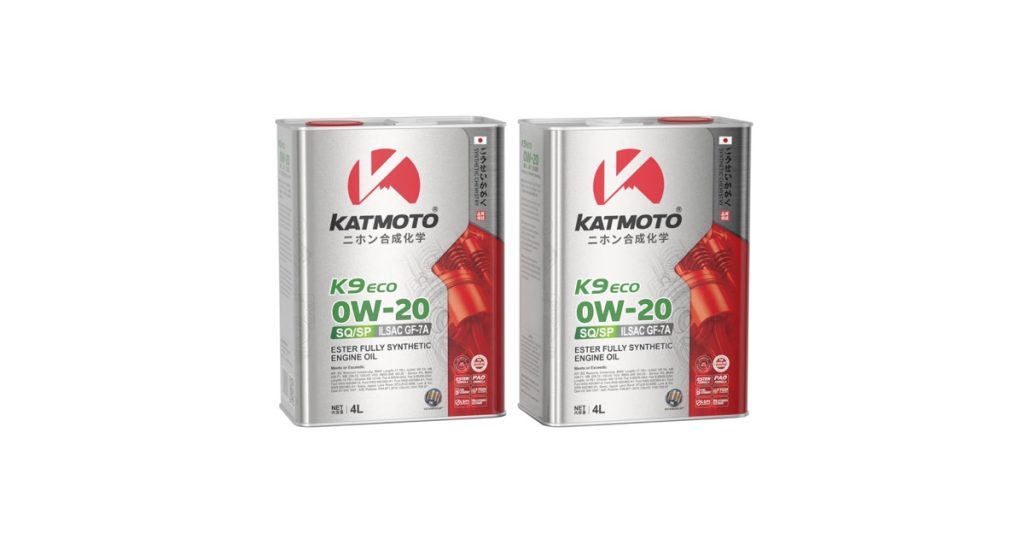
The KATMOTO K9 ECO 0W-20 product page lists TBN by ASTM D2896 at 8.0 mg KOH/g under ‘Target Typical Value’. [5] That is a first-party published product-information example. It is not an independently verified batch result, an agreed minimum or proof that a particular shipment has been tested. Confirm the current official TDS and any order-specific release documents before using it contractually.
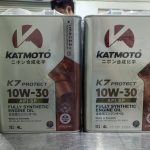
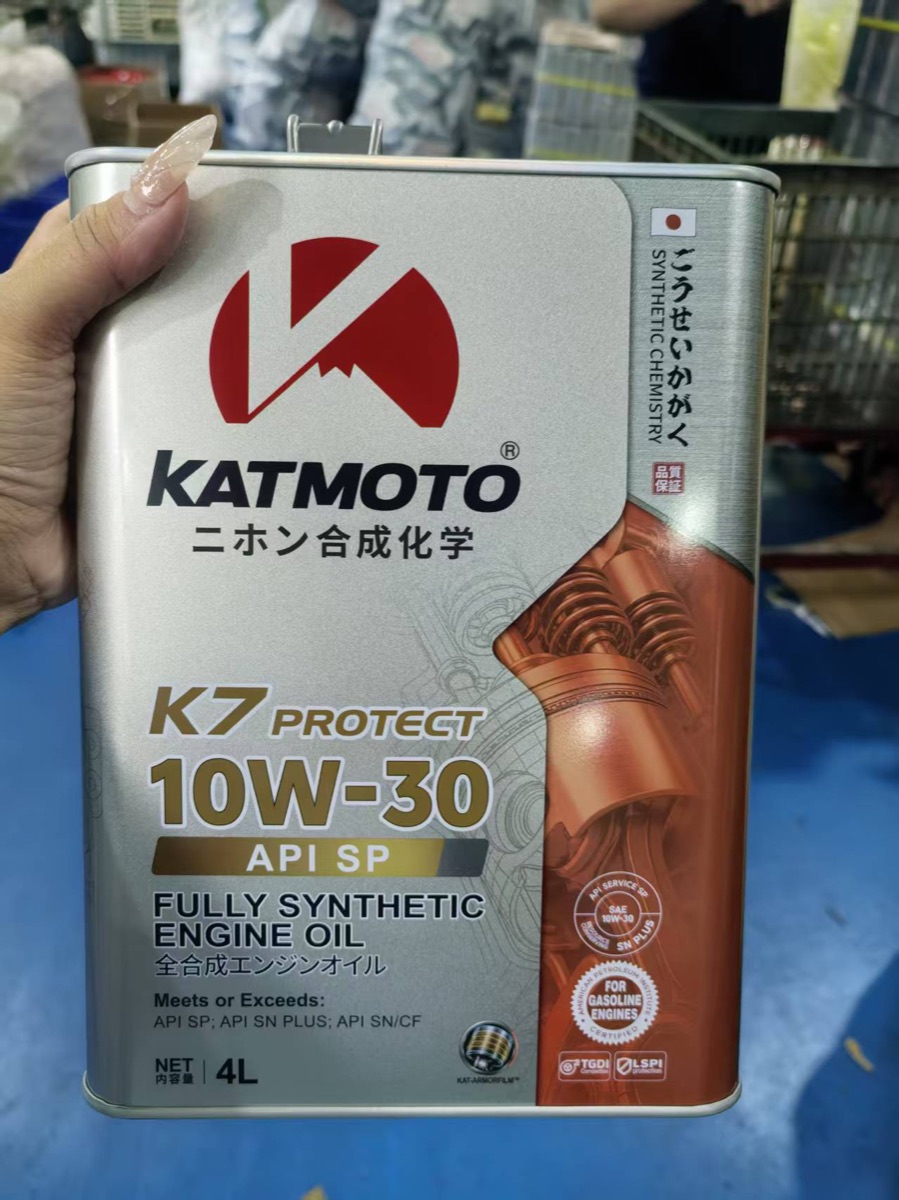
The featured K9 ECO 0W-20 packs identify the product discussed. The separate real packaging photograph shows K7 PROTECT 10W-30, a different SKU. It belongs here as a reminder to match a report to the exact label and grade. It does not transfer the K9 value to K7, show a titration or establish licensing or factory ownership.
Keep the original product document when a supplier sends a revised table. Record its revision date and ask which deliveries it covers. If a batch COA uses another method or gives a different number, request an explanation of the sample, reporting basis and applicable requirement rather than silently substituting one document for the other.
Higher TBN is not a shortcut to the right passenger-car oil
Start with the vehicle’s specified viscosity and performance requirements. Then review the documents for that oil. Base number alone cannot establish the complete specification, compatibility with the intended application, sulfated-ash content or an extended service interval. Those are separate questions requiring their own evidence. Asking for a higher number without those constraints can distract from the actual purchasing requirement.
Keep performance claims and authorisations separate too. API’s EOLCS is a licensing programme with defined requirements for use of its quality marks. [4] A TBN or TAN report is not an API licence, and packaging text is not a substitute for checking an applicable authorisation. OEM approval likewise requires its own supporting evidence.
For distributor training, describe TBN and TAN as document-reading tools, not promises about mileage. A drain recommendation must come from the relevant vehicle guidance and, where appropriate, a properly interpreted condition-monitoring programme. This article supplies no universal TBN minimum, TAN maximum, crossover threshold or replacement interval.
What to ask before accepting the report
Request the exact product name, SKU and SAE grade; whether the figure is typical, a specification limit or a batch result; the sample or lot identity; method and edition; units; test date; and report issuer. If the order specifies a limit, keep its source and decision rule alongside the result. Do not negotiate an acceptance threshold only after a disputed measurement arrives.
Where an independent retest is warranted, agree the sample identity, method and comparison basis with the laboratory and supplier first. Retain the complete reports and correspondence. A new number may clarify a genuine issue, but it cannot repair a misidentified sample or make two different methods equivalent.
For a KATMOTO enquiry, attach the document you are reading and identify the intended vehicle population and market. Ask for the current product information and clarification of any method mismatch. That is more actionable than asking whether ‘more TBN’ is available, and keeps the quotation tied to the oil your customers actually need.
| Gap | Question for the issuer | Safe next step |
|---|---|---|
| Method omitted | Which method and edition produced the number? | Obtain the complete report |
| Typical value presented as a limit | Where is the contractual requirement defined? | Separate product information from acceptance limits |
| Different product or batch | What exact sample does this report cover? | Match the label, order and sample records |
| Longer drain claimed from TBN alone | What vehicle-specific evidence supports the interval? | Do not convert one property into a mileage promise |
A practical five-step comparison
- Identify the required engine oil from the vehicle and market application, not from TBN ranking.
- Classify each number as typical information, a specified limit or an actual sample result.
- Match the property, method, units and sample status; keep incompatible method results separate.
- Clarify missing information with the supplier and laboratory before accepting, rejecting or retesting.
- Record the agreed conclusion and the exact supporting documents; preserve licensing and drain-interval checks as separate decisions.
Buyer questions about TBN and TAN
What is the difference between TBN and TAN?
They describe different measured chemical properties: base number and acid number. Read each with its test method and product context; they are not opposite ratings on a universal quality scale.
Can I compare D2896 with D4739 directly?
Do not treat them as interchangeable or apply an assumed conversion. Ask for a comparable method basis and, for trending, a consistent baseline. The methods’ different purposes require laboratory interpretation.
Is fresh engine oil supposed to have zero TAN?
Not necessarily. Additives can contribute to the measurement. Use the appropriate product information and agreed requirement rather than a blanket zero rule.
Does a higher TBN mean a longer drain interval?
Not by itself. Select the correct oil and follow the relevant vehicle guidance; any condition-based extension requires appropriate evidence and interpretation, not one number.
Is K9 ECO 0W-20’s published 8.0 a batch guarantee?
No. The cited page labels it a target typical value by ASTM D2896. Obtain current official documents and any agreed batch evidence for the order.
Can TBN or TAN prove API licensing or OEM approval?
No. These are property measurements. Licensing and approval claims need separate verification; neither a lab result nor a photograph supplies that authorisation.
Send the specification, not just a target number
Discuss your intended passenger-car engine oil with KATMOTO. Request current product documents and identify any TBN/TAN method or reporting question in your enquiry. Confirm test availability and order-specific requirements; this guide does not promise a laboratory service or commercial term.
Sources & References
- ASTM International — D2896-26: Base Number of Petroleum Products by Potentiometric Perchloric Acid Titration (Catalogue updated15April2026; public scope checked13November2026), ASTM International — D2896-26: Base Number of Petroleum Products by Potentiometric Perchloric Acid Titration
- ASTM International — D4739-26: Base Number Determination by Potentiometric Hydrochloric Acid Titration (Catalogue updated3June2026; public guidance checked13November2026), ASTM International — D4739-26: Base Number Determination by Potentiometric Hydrochloric Acid Titration
- ASTM International — D664-24: Acid Number of Petroleum Products by Potentiometric Titration (Catalogue updated16May2024; public scope checked13November2026), ASTM International — D664-24: Acid Number of Petroleum Products by Potentiometric Titration
- American Petroleum Institute — Engine Oil Licensing and Certification System (Checked13November2026), American Petroleum Institute — Engine Oil Licensing and Certification System
- KATMOTO — K9 ECO 0W-20 Product Information and Target Typical Values (Checked13November2026), KATMOTO — K9 ECO 0W-20 Product Information and Target Typical Values